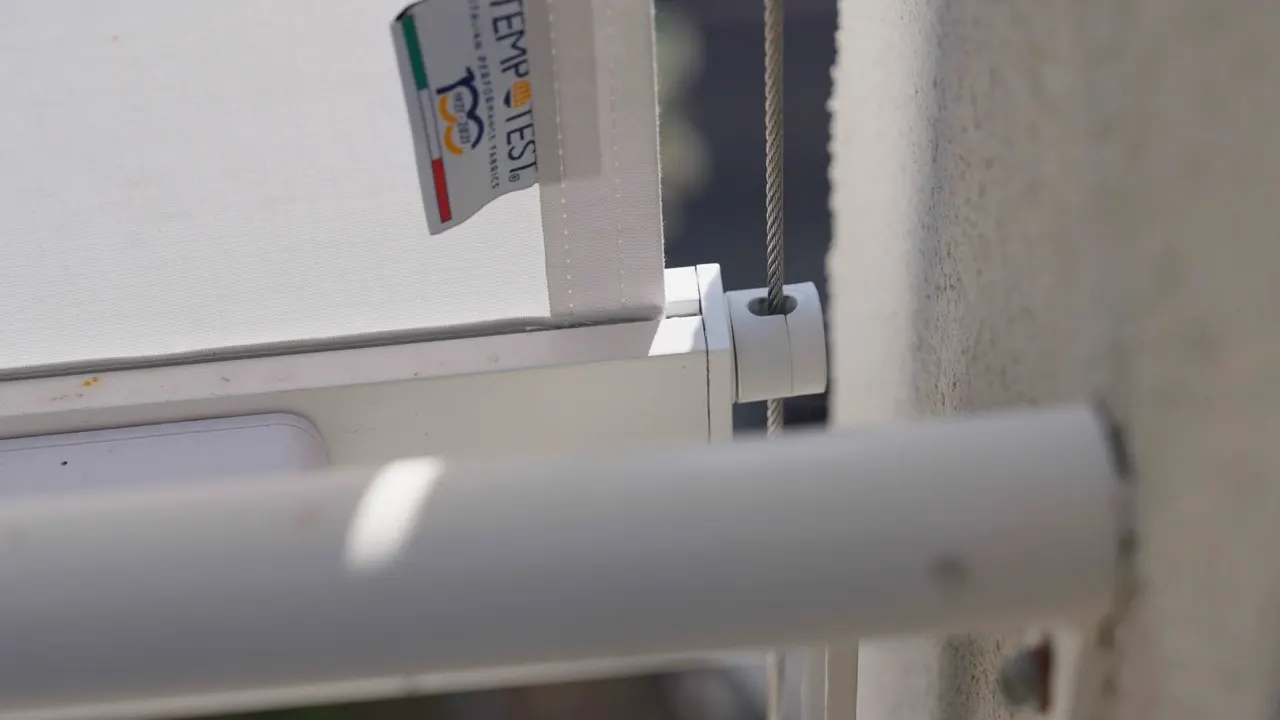
Close-up of the Tempotest fabric and the cable guide of a drop awning

TEMPOTEST fabrics

Made-to-measure awnings, fitted and set up by us

Folding-arm or drop-arm, with a motor and a wind sensor that retracts them when the wind gets up. Free site visit between the Teramo coast and the Piceno area.

4,8 on Google, 30 reviews In Martinsicuro since 1990 Site visit and quote, both free

From June onwards

You have the balcony, but for half the day you do not use it

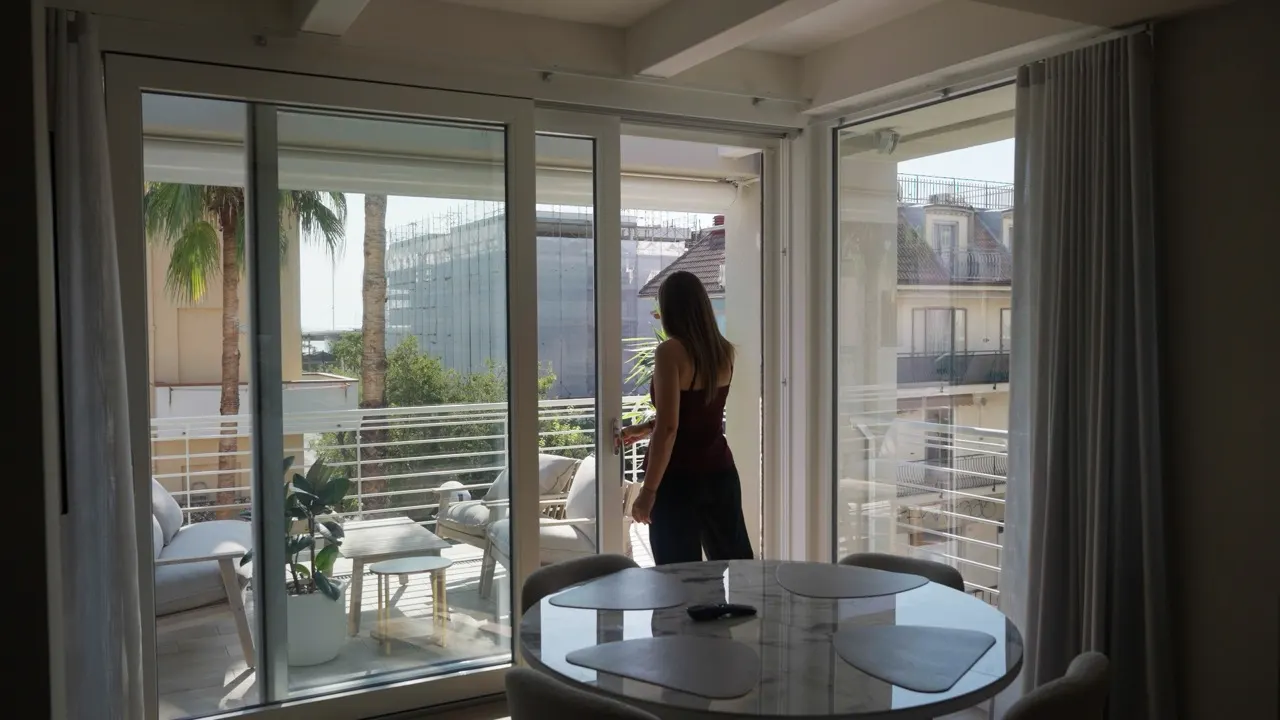
At eleven the sun beats on the railing and the table outside stays unusable until evening.

The glass of the French door is hot to the touch, the room behind heats up and you never switch the air conditioning off.

To keep the sun out you keep the roller shutters down, and at midday you live with the light on.

An awning solves all three at once, because it stops the radiation before it touches the glass. That is the only place you can really stop it: once it is in, the heat stays in.

Why outside

Three things an internal blind cannot do

An awning is external shading. The difference from a curtain or a venetian blind fitted inside is not a matter of taste, it is a matter of physics.

01

The heat stops before the glass

Radiation that crosses the glass becomes heat inside the house, and from there it does not go back out. Blocking it outside is the only way to avoid having to cool it afterwards.

External solar shading, movable and adjustable

02

The balcony becomes a room again

Under the awning you can eat out even at midday in August. Those are square metres you have already paid for and that stay empty four months a year.

Folding arms, no uprights on the floor

03

It closes itself when it has to

The wind sensor retracts the fabric as soon as a gust passes the set threshold, even if nobody is at home at the time. That is what saves the awning.

Motor with remote control and anemometer

The versions

Folding-arm or drop-arm, and the fabric you put on it

They are two different ways of making shade and you choose by where the sun hits, not by taste. The cassette is not a third type: it is the aluminium housing that closes over fabric and arms when the awning is retracted, and it can be had on either.

Folding-arm awning open over a terrace
Folding arms The fabric comes out horizontally and stays suspended, with no posts on the floor. It is the terrace awning.
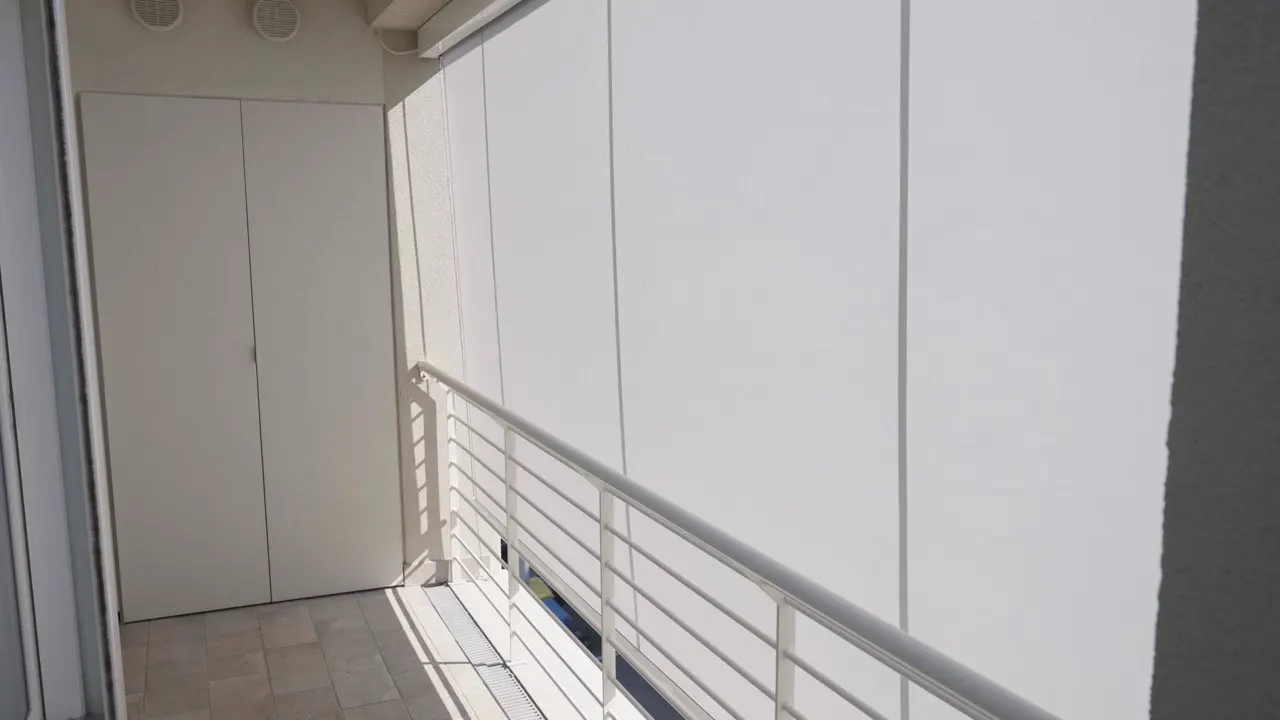
Drop-arm awnings with cable guides fitted to a balcony
Drop-arm It comes down vertically in front of the railing, held taut by cable guides. It stops the low sun in the morning and evening.
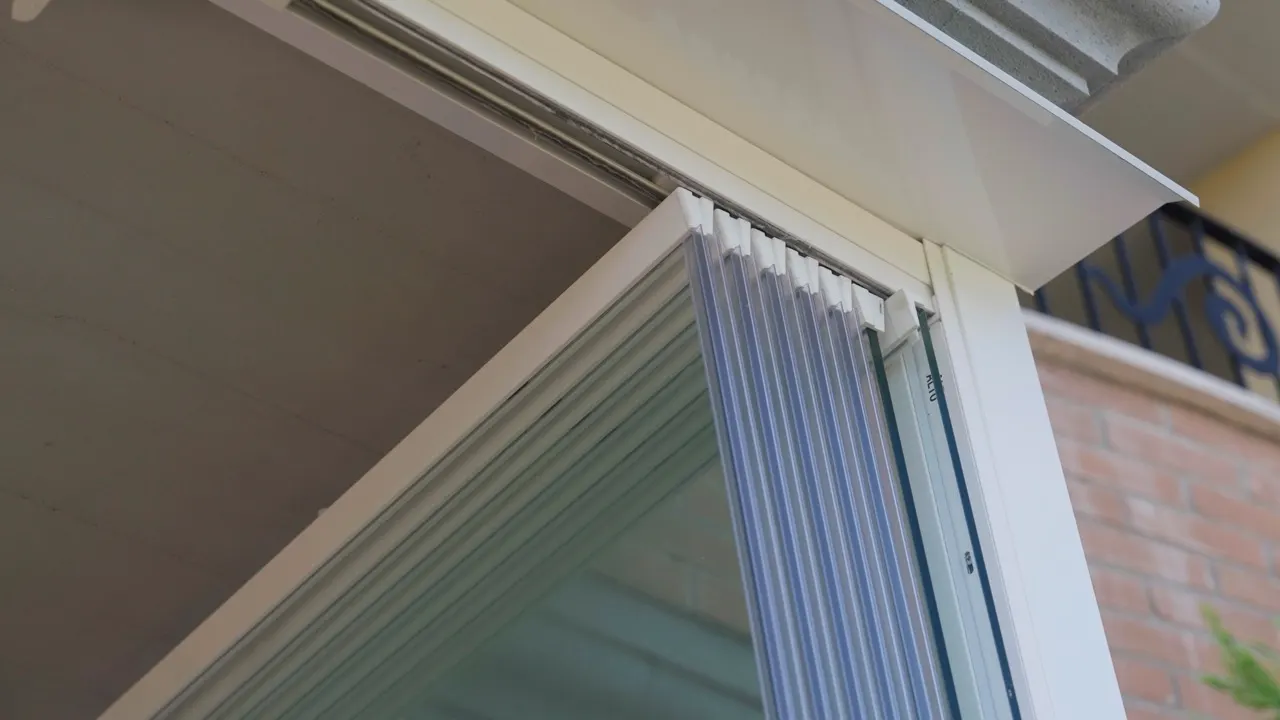
Close-up of the Tempotest fabric and the cable guide of a drop-arm awning
The fabric It is the part that takes sun and rain all year. You look at the TEMPOTEST swatch book at our premises, in daylight.

The wind

Wind is the only thing that breaks an awning

Awnings are classified for wind resistance under standard EN 13561, from class 0 to class 3. Class 3 is the highest and corresponds to force 6 on the Beaufort scale, that is, wind of around 50 km/h. Above that threshold the fabric has to be closed, and that goes for any awning of any brand: there is no awning that stays open in a gale.

That is why the wind sensor is not an accessory. It is an anemometer mounted on the structure that commands the motor and retracts the fabric by itself when a gust passes the threshold, even if you are at the beach or at work. On the coast, where the wind turns in ten minutes, it is the difference between an awning that lasts and one you buy again. A crank costs less and is fine on small spans, but the sensor only works with a motor.

Steel cable guides holding a drop-arm awning taut on a balcony

How we work

From the site visit to the first shade

Free site visit

We come and see where the sun hits and at what time. We measure the width and the usable projection, and we look at the wall, which is the part nobody looks at.

Written quote

Type of awning, fabric, motor, sensor and fitting: every item with its price. We go through it line by line.

Fitting

We bring everything ourselves and fix the structure on site. The fabric is tensioned and adjusted there, not in the workshop.

Test and adjustment

We try opening, closing and the sensor threshold together. If the fabric needs retensioning over time, we come back.

The quote

What pushes the price up or down

There is no single price, and anyone who gives you one over the phone without having seen the balcony is guessing. The items that move the number are always the same. The area of the fabric, that is, width by projection, because you pay by the square metre. The type, with the drop-arm awning the simpler one and the folding-arm with cassette more demanding to build and to fit. The fabric, because different qualities live side by side within the same swatch book.

Then there is everything that is not the awning. The motorisation, with the control and the power to run up there. The wind sensor. And the fixing, which on a sound solid wall is half an hour's work and on external wall insulation is a chapter of its own, because you need brackets that reach the load-bearing masonry. The site visit is there to close down these variables before writing a figure, not after.

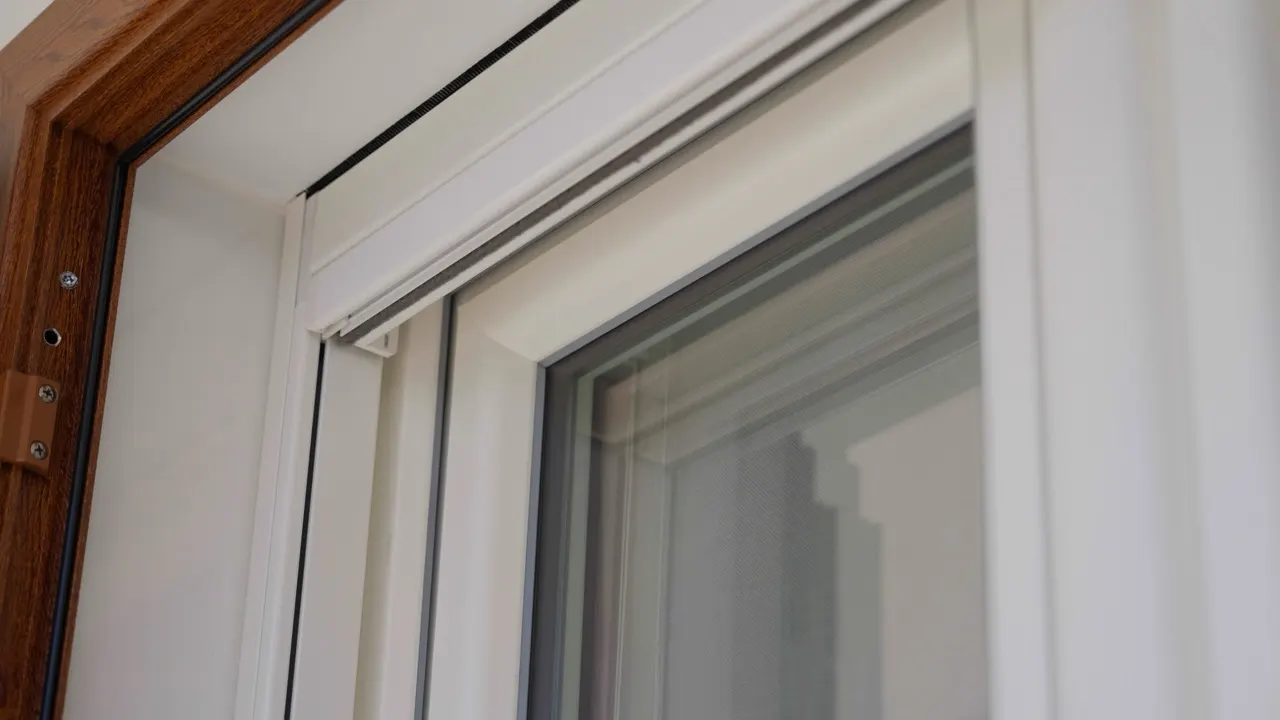
Tempotest acrylic fabric and the guide fixing on an awning

Tax deduction

Awnings are solar shading, and part of the cost comes back

It does not apply to all of them. The deduction covers CE-marked shading, fitted to protect a glazed surface facing anywhere from east to west via south, and with a solar factor gtot no greater than 0.35. The money comes back in ten equal yearly instalments and we prepare the ENEA filing.

10 yearsover which the deduction is recovered
gtot 0.35the maximum value required of the fabric
ENEAonline filing included in the service
How the tax credit works

Rates, ceilings and requirements change every year with the Italian budget law and differ between a main and a second home. The dedicated page has the current figures.

4,8 30 reviews on Google

People who have already had us work at their home

Reviews published on the Diva Infissi Google listing, reproduced here in full.

The reviews are shown in Italian, exactly as they were written on Google. We do not translate what our customers said.

Roberto Picciuto 6 Giugno 2025

IL TOP, DI MEGLIO NON C'È, SUPER CONSIGLIATO, Qualità cortesia e prezzi giusti

Verified review on Google
Alexia Neziri 5 Giugno 2025

I migliori, hanno svolto un lavoro impeccabile, cordiali e precisi in tutto! Lavoro di qualità im tempi ottimali! Grazie davvero

Verified review on Google
Francesca D'Angelo 5 Giugno 2025

Esperienza e professionalità prodotti di ottima qualità. Consigliatissimo.

Verified review on Google
arturix 5 Giugno 2025

ottimo prodotto , prezzo giusto , persone cordiali e molto professionali nella scelta del prodotto e importantissimo presenti nel post vendita !consigliatissimi

Verified review on Google
Ilaria Vallese 5 Giugno 2025

Ho contattato la Diva Infissi per la sostituzione degli infissi di casa e sono rimasta molto soddisfatta. Il team è stato puntuale, professionale e preciso in ogni fase del lavoro, dal sopralluogo alla posa finale. I nuovi infissi sono di ottima qualità, hanno migliorato isolamento termico e acustico, e l’estetica della casa ne ha guadagnato. Un ringraziamento particolare al titolare sempre disponibile e attento alle richieste. Consiglio vivamente quest’azienda a chi cerca affidabilità, competenza e materiali di alto livello.

Verified review on Google

Why choose us

The questions you are asking yourself, and our answer

Who comes to fit it?

Our own fitters, not an outside crew. Whoever takes the measurements and looks at the wall is whoever then fixes the structure, so if something does not add up they notice before ordering.

Will the wall take the weight?

An open folding-arm awning works like a lever on the fixings, and the load depends on what is behind the plaster. At the site visit we check whether it is solid masonry, concrete or external insulation: on insulation you need brackets that reach the structure, otherwise it works loose over time.

Can the price change along the way?

No. After the site visit the quote is the quote. If extra work is needed we find it beforehand, not once fitting has started.

Can I see the fabrics in person?

Yes, at Via dell'Industria 10 in Martinsicuro. A colour on the swatch book and the same colour stretched out in the sun are two different things; it is worth looking before choosing.

And if the fabric tears in a few years?

The fabric is replaced on its own, without touching structure, arms and motor. It is the consumable part of the awning and it is normal to change it long before the rest.

Do you do the rest as well?

Yes: windows, shutters, roller shutters, insect screens, glazing and balcony enclosures. One person to deal with for everything around the balcony.

Frequent questions

What people choosing an awning ask

These are the questions that come up most often, on the phone and on Google.

What kind of awning do you need for a balcony?

On a balcony of normal depth the choice is nearly always the drop-arm awning: it comes down vertically in front of the railing, does not steal floor space and stops the low sun of morning and evening, which is what reaches furthest in. If the balcony is wide, or it is a terrace with room for a table, the folding-arm awning makes sense, shading from above with no posts on the floor.

The measurement that decides is not the width, it is the projection: an awning that comes out too little leaves uncovered exactly the strip near the railing. If you are in a block of flats, read the building rules before choosing model and colour: nearly all of them require a single shade across the facade.

When is a drop-arm awning the right choice?

When the sun comes in low and from the side, that is, on east- and west-facing facades, and when you also want a bit of privacy. A folding-arm awning shades from above and against the seven o'clock evening sun it does practically nothing, while a drop-arm closes the vertical plane.

It has to be kept taut, otherwise it flaps and wears: you use steel cable guides or side arms that push it out by a few degrees. On the fabric you have two routes: more open technical meshes let you see out, solid fabrics give sharp shade and close the view.

How much does an awning cost?

There is no price per awning because there is no standard awning. You pay per square metre of fabric, that is, width by projection, and three items weigh on that number: the type (drop-arm, folding-arm, with or without cassette), the quality of the fabric and the motorisation with the wind sensor. The fixing is the fourth item, and it can only be priced after seeing the wall.

When you compare two quotes, check that they state the wind resistance class, the name of the fabric and the type of brackets. If one costs much less than the other, it is nearly always because one of those three lines is missing. We put the figure in writing after the site visit, and from there it does not move.

What is different about Tempotest fabrics?

TEMPOTEST is the brand of awning fabrics we work with. The family most used outdoors is solution-dyed acrylic: the colour is not printed onto the yarn, it is inside the fibre, so the sun bleaches it far more slowly than a surface-dyed fabric.

Outdoor acrylic is also water-repellent and breathable, so no greenhouse effect builds up underneath and light rain runs off. It is not a roof, though: in a storm the awning has to be closed, and closed dry.

DIY store awning or made to measure, which is better?

A standard-size awning costs less and on a small balcony it may be enough. The problems come on two fronts. The size, because a balcony almost never matches a catalogue size and you end up leaving a strip uncovered or giving up projection. And the fixing, which is the part nobody sells with the awning.

An open folding-arm awning pulls on the fixings like a lever: how much it holds depends on what is behind the plaster, and on external wall insulation you need a bracket that reaches the load-bearing masonry. The difference between the two routes shows there, not in the fabric.

How do you clean awnings?

Fabric open and dry, a soft brush to take away dust and deposits, then cold or lukewarm water and mild soap. Rinse well and leave it open until it is completely dry. No bleach, no solvents and above all no pressure washer: the jet opens the weave and takes the water-repellent treatment away.

The fabric does not go in the washing machine and is not ironed. One go at the start of the season and one at the end is enough. What does most damage is not dirt, it is closing the awning wet.

How do you get mould off awning fabric?

Black marks on acrylic are almost never mould in the fabric: the fibre is synthetic and does not feed it. It is mould grown on the organic dirt deposited on top, so it is attached to the layer of dirt, not to the yarn. Treat it with warm water, mild soap and a soft brush, working patiently and rinsing well.

If it resists there are detergents made for outdoor acrylic fabrics. Avoid bleach: it strips the colour and ruins the water repellency. The real remedy is preventive, though: never close the fabric damp and remove leaves and dust before they turn to paste with the water.

Can awnings be washed without taking them down?

Yes, and it is the normal way to do it: awning fully out, dry brushing, washing with water and mild soap using a long-handled brush, rinsing and air drying. Taking the fabric off is only needed for a deep wash or for a repair.

If the balcony is on the third floor the problem is not the washing, it is reaching it safely: you work from inside the balcony with the pole, without leaning out and without climbing on the railing. On awnings with a big projection or on tall facades it is a job to do with the right equipment, not balancing on a chair.

Can a torn awning be repaired?

A small tear away from the edges can be stopped with a self-adhesive patch for outdoor fabrics, applied on both sides with the fabric clean and dry: it holds, but it shows. Unpicked seams are restitched with polyester thread, not ordinary sewing thread, which the sun destroys in one season.

When the tear starts from the edge, runs along a seam or the fabric has become brittle to the touch, it is better to replace the fabric: only that is changed and the structure, arms and motor stay where they are.

An awning or a venetian blind, which is better?

If the problem is heat, the awning wins hands down, because it works outside the glass. An internal venetian blind stops the light, but by the time the light reaches the slat the heat has already passed through the glass and is inside the room.

The venetian blind has other advantages: it doses the light slat by slat, it does not fear wind and it needs no seasonal maintenance. Many people have both, with the awning outside cutting the bulk of the sun and the blind inside regulating the light. External venetian blinds are something else again: they are shading in the full sense and behave like awnings.

Let us start

Six questions and we already know where the shade is needed

It takes under a minute to answer. We call you back within 24 working hours to arrange the free site visit.

  • Free site visit and quote, with no obligation
  • The price written down is the final one
  • Attach a photo of the balcony and the estimate gets more accurate
  • Deduction for solar shading, ENEA filing included

Or call 328 329 5757
Mon - Fri 08:00 - 12:15 / 14:00 - 18:15

Call WhatsApp Get a quote