01
Thermal insulation
uPVC starts ahead because it insulates by the way it is made. Aluminium only gets close with a serious thermal break and good glazing, and that level costs more.
uPVC wins
The comparison
We have been fitting both for years, so we have no material to defend. Below is the comparison item by item, including the case of people living on the coast.
Where the doubt comes from
One retailer swears uPVC is the only sensible choice. The next one calls it plastic and steers you towards aluminium.
Online you find tables full of abbreviations: Uw, thermal break, chambers, transmittance. Nobody tells you which one matters for your home.
Meanwhile it is you who decides, the spend is large and those windows stay where they are for thirty years.
The truth is that each of the two wins on something specific. You only need to know on what, and to look at how your house is built.
The underlying difference
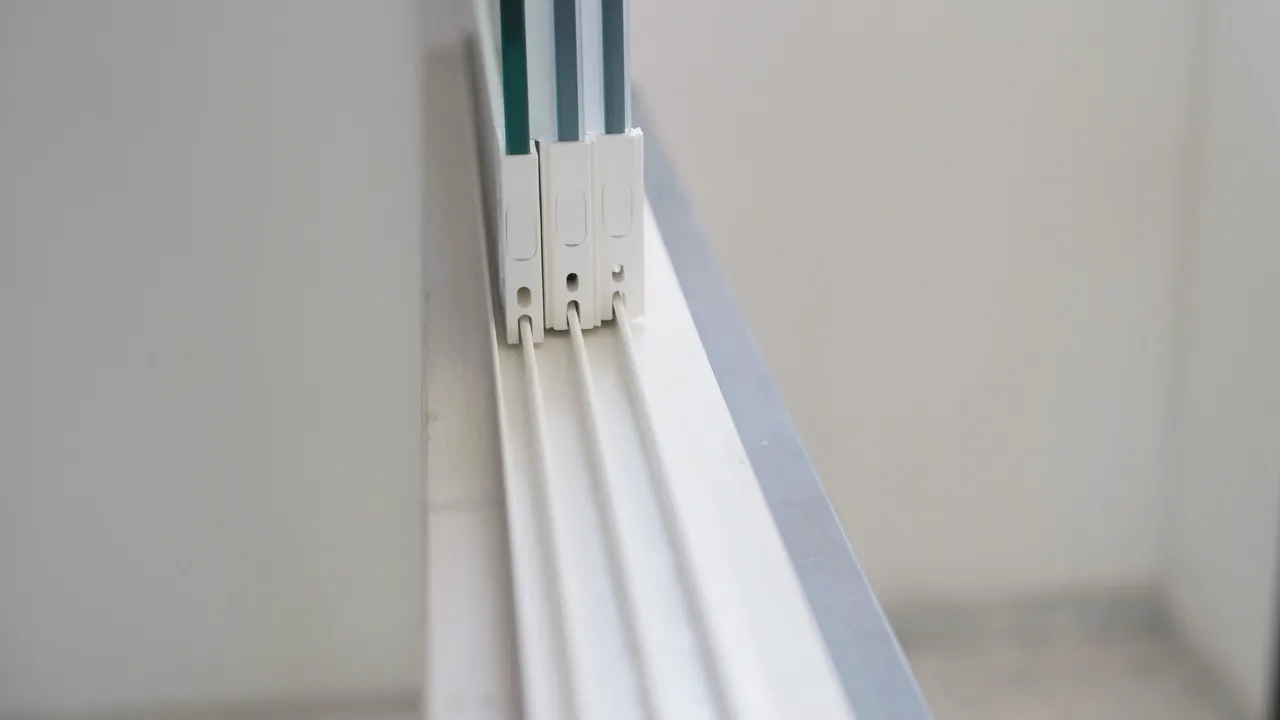
uPVC is an insulator in itself. The profile is hollow and divided into chambers: inside there is still air, and still air is one of the best insulators there is. No special measure is needed to stop the cold, the material takes care of it.
Aluminium is a metal, so it carries the heat with it. That is why the thermal break exists: a strip of insulating material inserted between the inner and outer parts of the profile, interrupting the thermal bridge. A well-made thermal-break aluminium gets close to uPVC, but you pay for that result.
Everything else follows from this: why uPVC gives more for the money, why aluminium can afford slim profiles, why an old aluminium window streams with condensation in winter.
Item by item
Neither wins on everything. These are the points on which it is really decided, with our answer beside each one.
01
uPVC starts ahead because it insulates by the way it is made. Aluminium only gets close with a serious thermal break and good glazing, and that level costs more.
uPVC wins
02
Metal holds up with less section, so the frame steals less glass. For the same hole in the wall, more light comes in with aluminium.
Aluminium wins
03
A wide, heavy sash has to stay straight over the years. Aluminium is load-bearing in itself; uPVC needs internal steel reinforcement and beyond a certain size it is not the right tool.
Aluminium wins
04
Here the frame counts for little. What makes the difference is acoustic laminated glass, the gaskets and the fitting: with the same glazing the two materials are equal.
A draw, the glass decides
05
uPVC is not a metal, so it does not oxidise and does not stain. Anodised, powder-coated aluminium holds up well, but it wants a regular wash of frames and hardware.
uPVC wins near the sea
06
Aluminium is powder coated in any RAL shade, matt or textured. uPVC is foiled on one or both sides with a wide but not endless catalogue, and white remains the cheapest finish.
Aluminium wins
The verdict
For a house lived in all year round, with normal-sized windows, the answer is uPVC. It insulates more for the money, it does not corrode on the coast and it asks for no maintenance. That is why it is the material we fit most often here.
The answer becomes aluminium when there is wide glazing involved, a heavy sliding door, a frame that has to stay slim or a colour uPVC does not have. In those cases metal has no serious alternative, and the thermal break recovers almost all the insulation gap.
In many houses the right answer is both: uPVC on the windows, aluminium on the large French door in the living room. Nobody says you have to use one material for the whole house, and on the quote the two items stay separate.
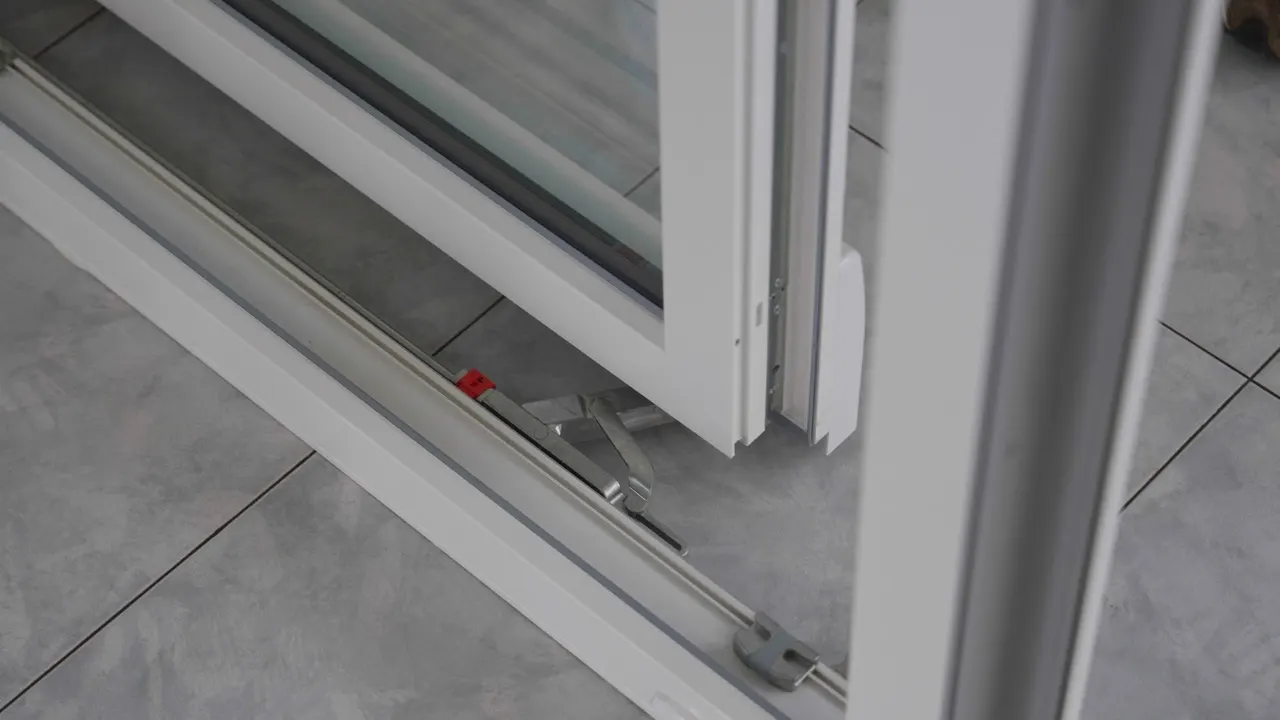
Up close
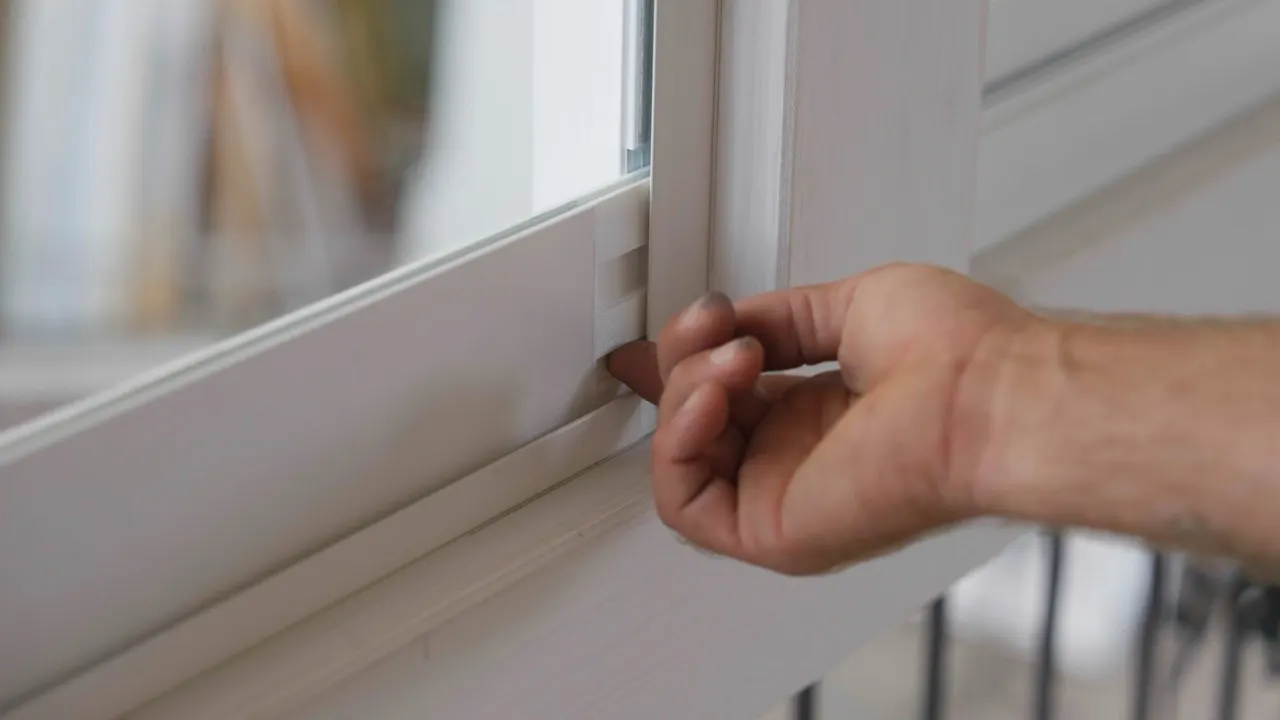
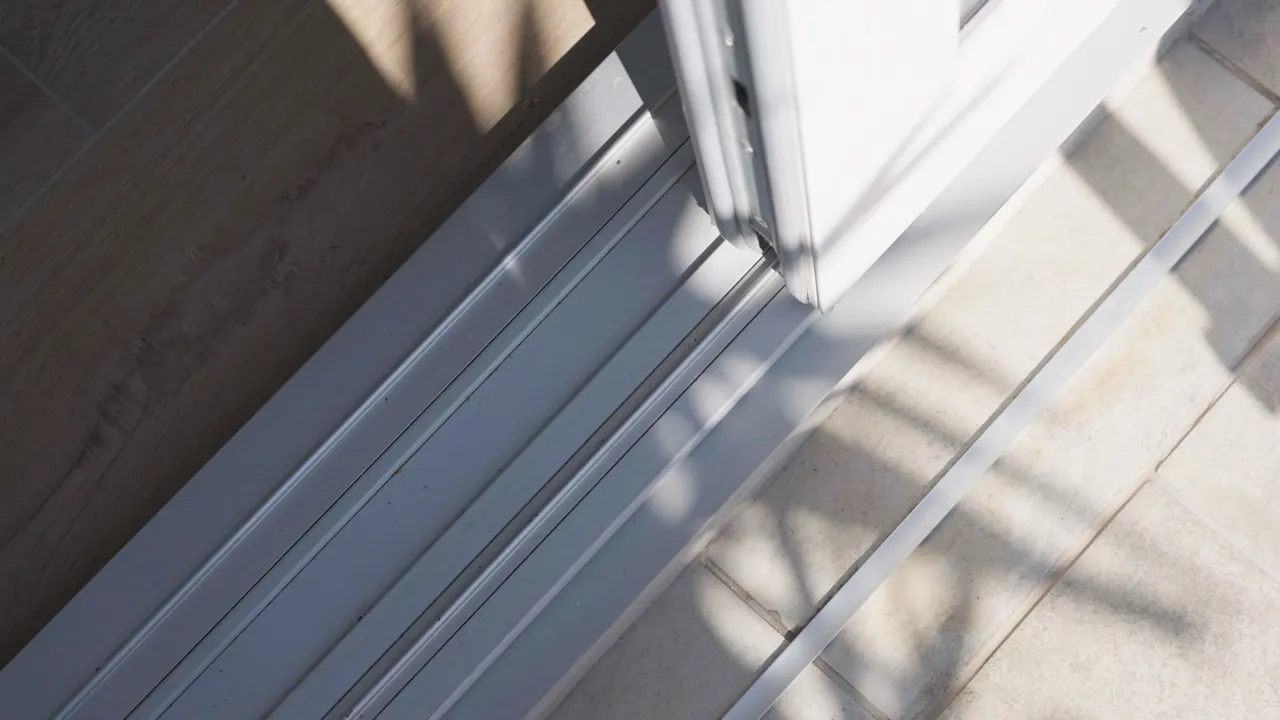
The differences are visible to the naked eye, if you know where to look. They are the same three things we compare in the showroom with a section of profile in hand.

The coastal case
Salt air gets everywhere and on windows it shows on the hardware before it shows on the frames. uPVC is not a metal: it does not oxidise and does not stain. Today's aluminium, anodised and powder coated, holds up well, but it has to be washed regularly. If the house is a stone's throw from the beach and you only open it in summer, uPVC is what gives you fewest worries.
The price
The material is only the first line. The total is moved by the others: how many sashes each window has, how big the opening is, what glazing you put in (double, triple, acoustic, laminated safety), what hardware, and whether the colour is on one side or on both.
Then there is the opening itself. If the existing subframe is sound the new one goes over it and the job is quicker; if it is rotten or out of square it has to come out, and the total changes. The floor and the access count too, because large glazing does not carry itself up to the third floor without a lift.
That is why you will not find a figure on this page: giving one without having seen your openings means having to correct it later. After the site visit we leave you a written quote with every item named, and from there the price does not move.
How it is decided
How many windows, which way they face, whether you live there all year or only in summer. Two minutes is enough, on the phone or with the form on this page.
We measure the openings one by one and look at the state of the subframes, the orientation and how close you are to the sea. Those are the things that shift the choice.
Profile, glass, hardware and fitting, every item with its price. If the comparison makes sense, we prepare it with both materials for the same job.
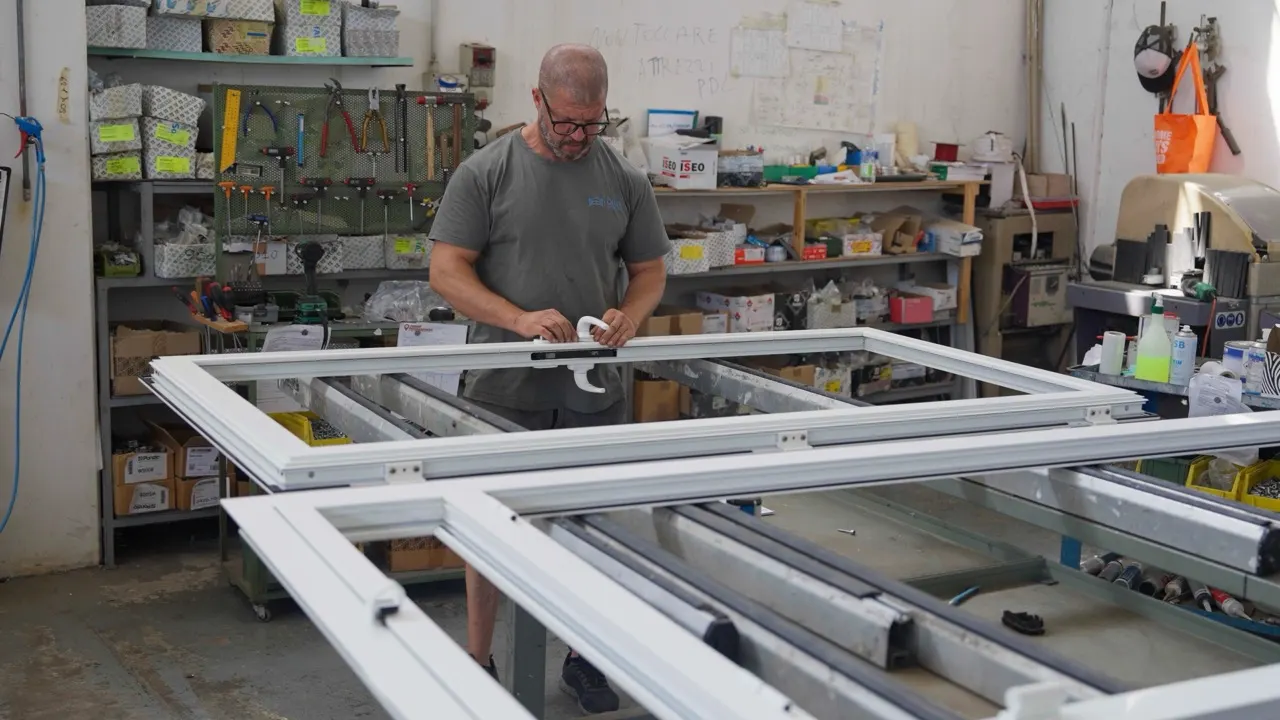
Our own fitters install, not a crew brought in from outside. At the end we try every sash together and take the old windows away.
Tax deduction
Replacing windows is one of the deductible works in Italy, in uPVC as in aluminium. What counts is the performance of the new window, not what the frame is made of. The money comes back in ten equal yearly instalments and we prepare the ENEA filing.
Rates and ceilings change every year with the Italian budget law and differ between a main and a second home. The dedicated page has the current figures.
Reviews published on the Diva Infissi Google listing, reproduced here in full.
The reviews are shown in Italian, exactly as they were written on Google. We do not translate what our customers said.
IL TOP, DI MEGLIO NON C'È, SUPER CONSIGLIATO, Qualità cortesia e prezzi giusti
Verified review on GoogleI migliori, hanno svolto un lavoro impeccabile, cordiali e precisi in tutto! Lavoro di qualità im tempi ottimali! Grazie davvero
Verified review on GoogleEsperienza e professionalità prodotti di ottima qualità. Consigliatissimo.
Verified review on Googleottimo prodotto , prezzo giusto , persone cordiali e molto professionali nella scelta del prodotto e importantissimo presenti nel post vendita !consigliatissimi
Verified review on GoogleHo contattato la Diva Infissi per la sostituzione degli infissi di casa e sono rimasta molto soddisfatta. Il team è stato puntuale, professionale e preciso in ogni fase del lavoro, dal sopralluogo alla posa finale. I nuovi infissi sono di ottima qualità, hanno migliorato isolamento termico e acustico, e l’estetica della casa ne ha guadagnato. Un ringraziamento particolare al titolare sempre disponibile e attento alle richieste. Consiglio vivamente quest’azienda a chi cerca affidabilità, competenza e materiali di alto livello.
Verified review on GoogleThe objections
We sell both: REHAU for uPVC, PONZIO for aluminium. If we give you the wrong answer we are the ones who have to come back and sort it, so getting it right suits us too.
Yes, and it is a common choice: uPVC on the windows and aluminium on the large glazing. You pick a matching shade and from outside the house still looks coherent.
Bring them along. We go through them line by line and tell you where they really differ: very often it is not the material, it is the glass or the hardware.
Yes, at Via dell'Industria 10 in Martinsicuro. A section of profile in your hand clears things up better than ten catalogues.
Our own fitters, not an outside crew. Whoever takes the measurements is whoever installs, so if something does not add up they notice before ordering.
We have been here since 1990, in the same place. If a sash needs adjusting over time, we come back and sort it.
Frequent questions
These are the questions that come up most often, on the phone and on Google.
For a house lived in all year round, with normal-sized windows, uPVC: it insulates more for the money and asks for no maintenance. For wide glazing, heavy sliding doors or frames that have to stay slim, aluminium: it is load-bearing in itself and steals less glass.
If the house has both situations, you fit both materials. Nobody says you have to choose one for the whole property.
Near the coast uPVC has a practical advantage: it is not a metal, so salt air does not attack it and leaves no marks. Anodised, powder-coated aluminium holds up well, but it has to be washed regularly, the frames and above all the hardware.
A few hundred metres from the beach, as happens in Martinsicuro, Villa Rosa or Porto d'Ascoli, uPVC is the choice that gives fewest worries. If you go for aluminium anyway, factor in a rinse with fresh water now and then.
The thermal break interrupts the metal's thermal bridge with an insulating strip between the inner and outer parts of the profile. A good thermal-break aluminium gets close to uPVC performance, but it has to be a serious series, not the cheapest in the catalogue.
So: for the same budget, on pure insulation uPVC gives more. Thermal-break aluminium is chosen when you also need its other qualities, that is, slim profiles, large sashes and particular colours.
For the same performance, thermal-break aluminium costs more than uPVC, which is why uPVC is the best-selling material for homes. The gap is not fixed, though: two quotes can flip over just by changing the glass, the hardware or the number of sashes.
You will not find figures on this page because giving them without having seen your openings means correcting them later. At the site visit we measure and leave you a written quote item by item, and from there the price does not change.
Because metal conducts. If the profile has no thermal break, in winter the inner face of the frame gets as cold as the air outside: the vapour in the house meets it and settles on it as droplets. It is the same reason a cold glass sweats.
It happens almost always on old aluminium windows, the ones without a thermal break and with single glazing. With a thermal-break profile and good double glazing the problem disappears, provided you air the rooms: the vapour produced in a house has to get out somewhere.
An aluminium frame, anodised and powder coated, works for decades without giving: it is the more stable of the two materials. What wears out first are the gaskets and the hardware, and they are replaced without touching the frame.
Good-quality uPVC is in the same order of durability, over thirty years. The real difference is not made by the material, it is made by the fitting: a window put in crooked works badly from day one.
In favour: slim profiles, so more glass and more light; excellent behaviour on large sashes and sliding doors; powder coating in any RAL shade; a stable material, endlessly recyclable.
Against: without a thermal break it insulates badly; with a good thermal break it costs more than uPVC for the same performance; near the sea it wants more regular cleaning of frames and hardware.
Not much. A thermal break cannot be added afterwards: either the profile has one, or it stays a thermal bridge. What can be done is replacing the gaskets and sealing the perimeter between frame and wall, where more air often passes than you would think.
Changing the glazing is sometimes possible, but on an old frame the rebate rarely takes a double-glazed unit, and the frame stays cold anyway. If the window is one of those without a thermal break, the money goes further spent on replacement.
Wood insulates well and is beautiful, but it is alive: it takes up moisture, it moves and the finish has to be redone every few years, all the more if the window catches sun and sea wind. uPVC has similar performance and asks for nothing but a wipe with mild soap.
If you need wood for a planning restriction or for taste, the least demanding route is wood-aluminium, which keeps the wood inside and puts metal outside as a shield. We work with REHAU uPVC and PONZIO aluminium, and it is on those two that we can give you an honest comparison.
On replacing windows in an existing home the Italian VAT rate is 10%, because it counts as extraordinary maintenance. 22% applies to new builds.
There is one more rule: windows count as significant goods. The reduced rate covers the labour in full and covers the value of the window only up to the value of the rest of the service, while the excess goes at 22%. On the invoice the two parts have to be shown separately, the law requires it.
Read further
Let us decide together
It takes under a minute to answer. We call you back within 24 working hours to arrange the free site visit.
Or call 328 329 5757
Mon - Fri 08:00 - 12:15 / 14:00 - 18:15