01
More light comes in
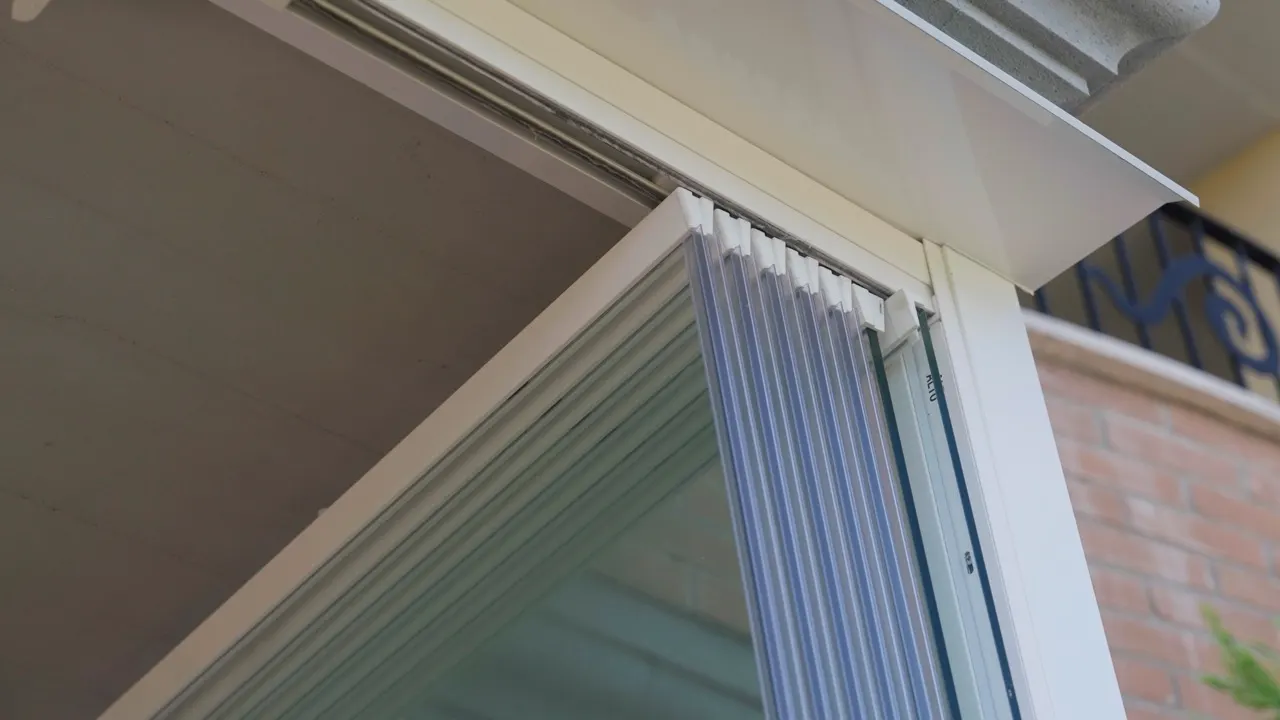
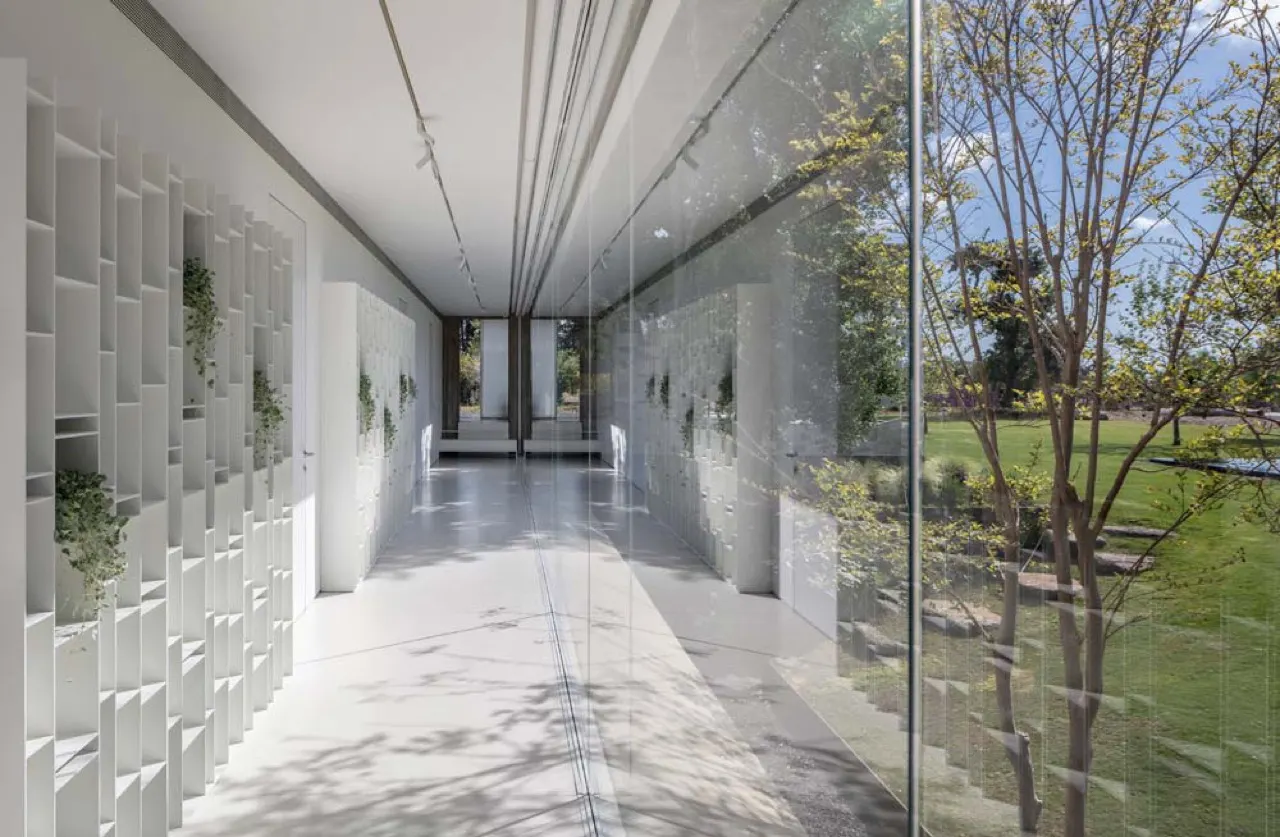
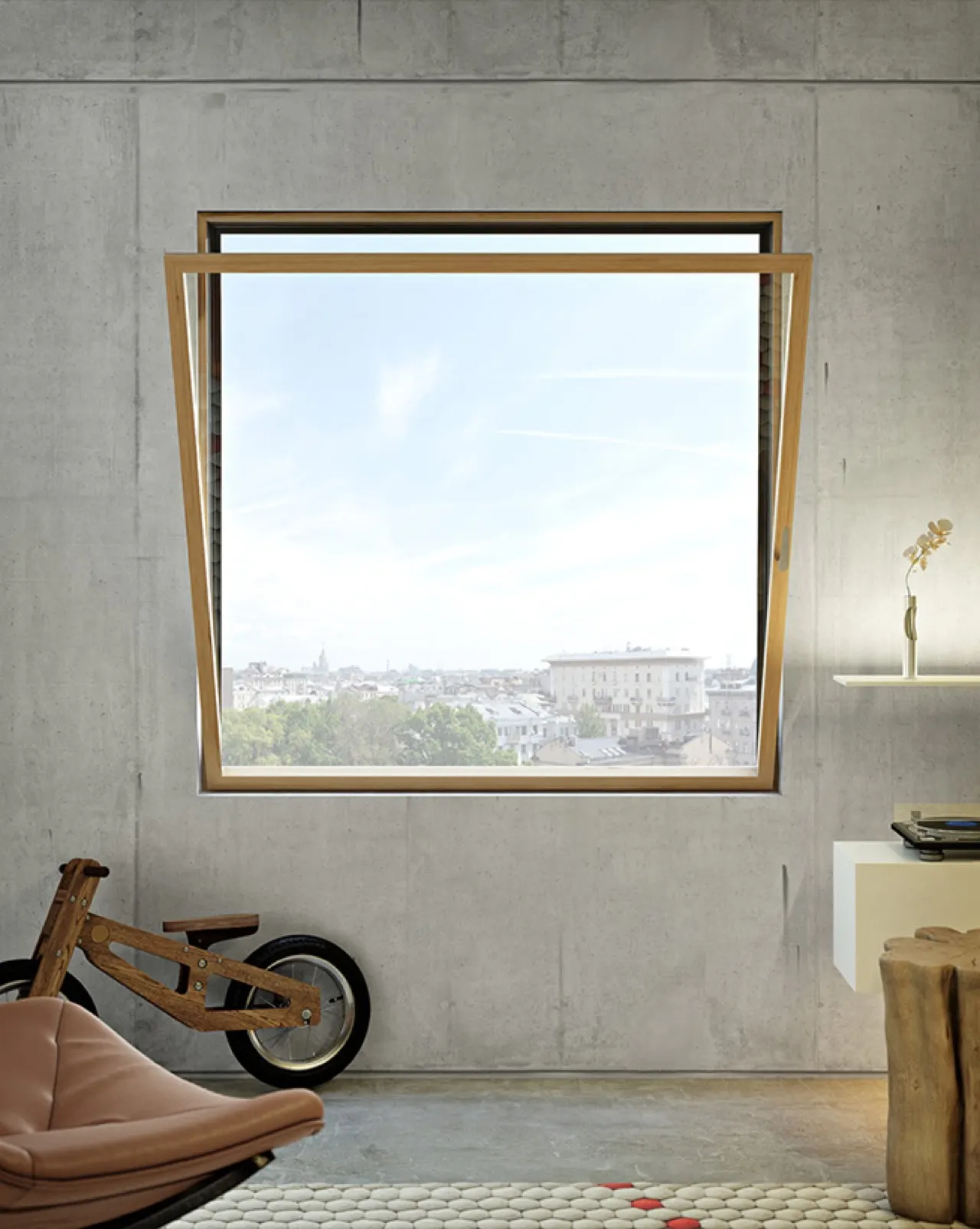
For the same hole in the wall, an aluminium profile is narrower than a uPVC one. Less frame shows, the glazed area grows and the room changes without touching the masonry.
PONZIO thermal-break profiles
PONZIO profiles
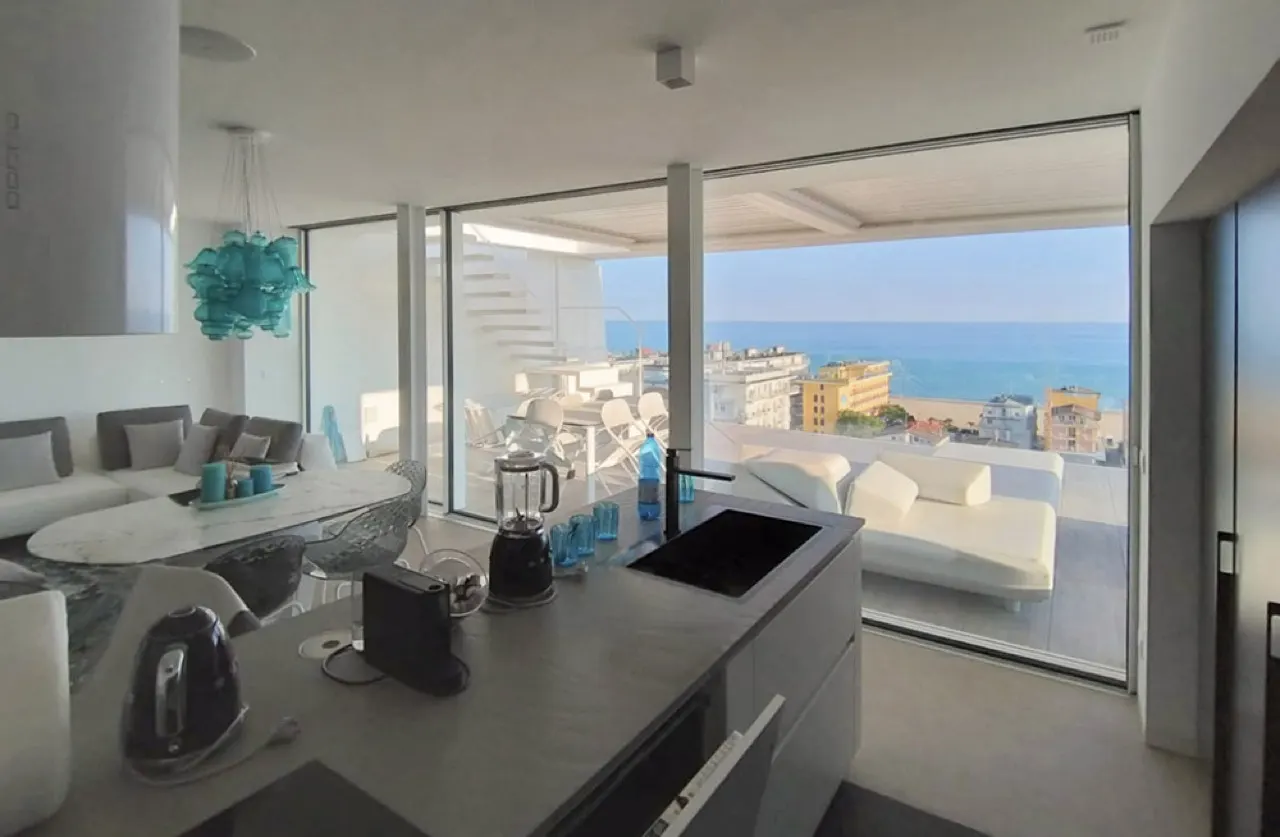
More glass and less frame, with the insulation of a modern window. Free site visit between the Teramo coast and the Piceno area.
The moment you notice
In the morning the frame is cold to the touch and wet, and a line of water has formed on the sill.
The profile eats up half the opening: the glass is small and the room stays dark even at midday.
You would like a single French door onto the terrace and you are told it cannot be done at those sizes.
Three different problems with the same answer. Today's thermal-break aluminium has nothing to do with what was made thirty years ago: it insulates, and it carries spans no other material will hold.
Why aluminium
You do not choose aluminium to save money. You choose it because it is the only material that holds a narrow profile and a big sash together without giving.
01
For the same hole in the wall, an aluminium profile is narrower than a uPVC one. Less frame shows, the glazed area grows and the room changes without touching the masonry.
PONZIO thermal-break profiles
02
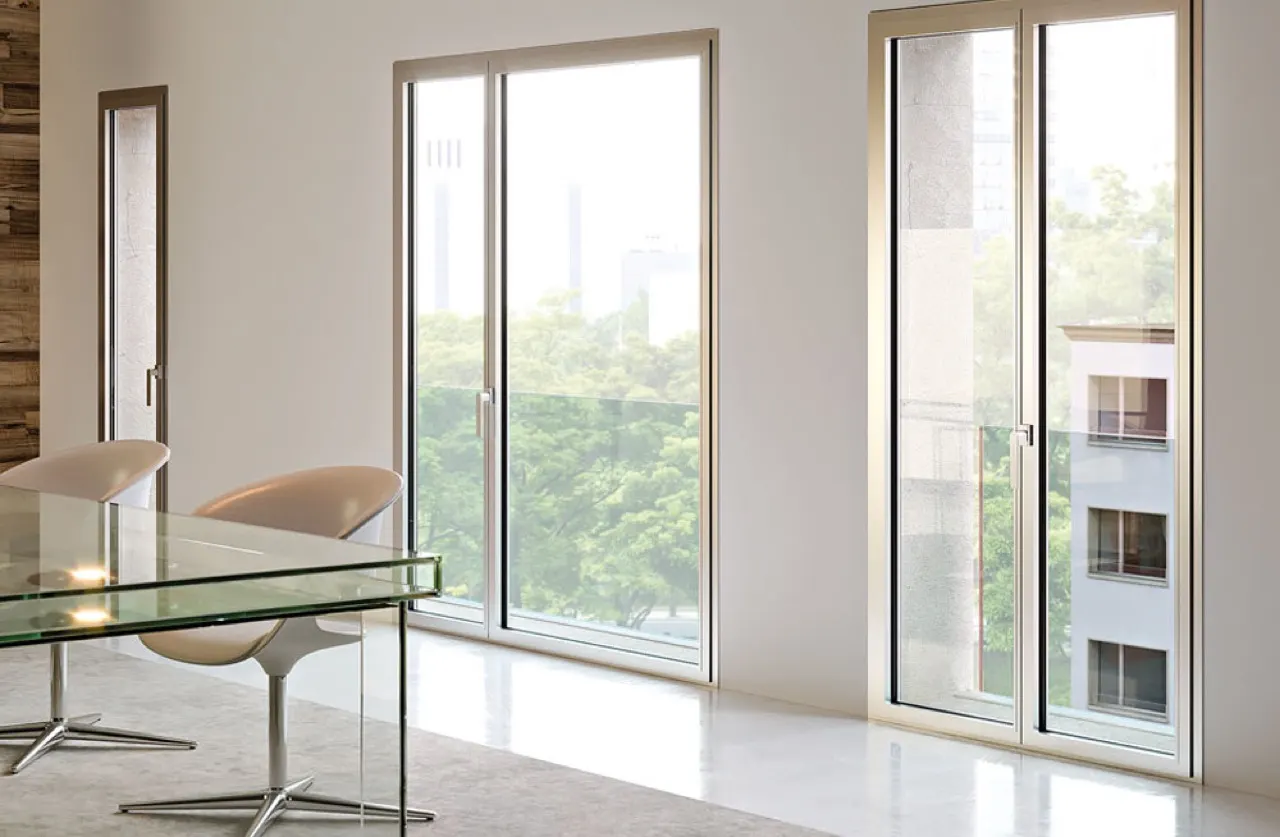
Metal is stiff, so a wide, heavy sash stays square over the years. That is why large sliding doors and full-height glazing are made in aluminium.
Sliding, lift-and-slide, French doors with wide spans
03
Powder coating covers the whole RAL chart, gloss, matt or textured, and can be done in two colours: anthracite towards the street, white towards the living room.
Powder coating, wood-effect finish available too
The difference that matters
Aluminium is a metal, and metals conduct heat. A solid profile carries the cold from outside to inside like a pipe: that is the thermal bridge that made the windows of the 1980s stream with water.
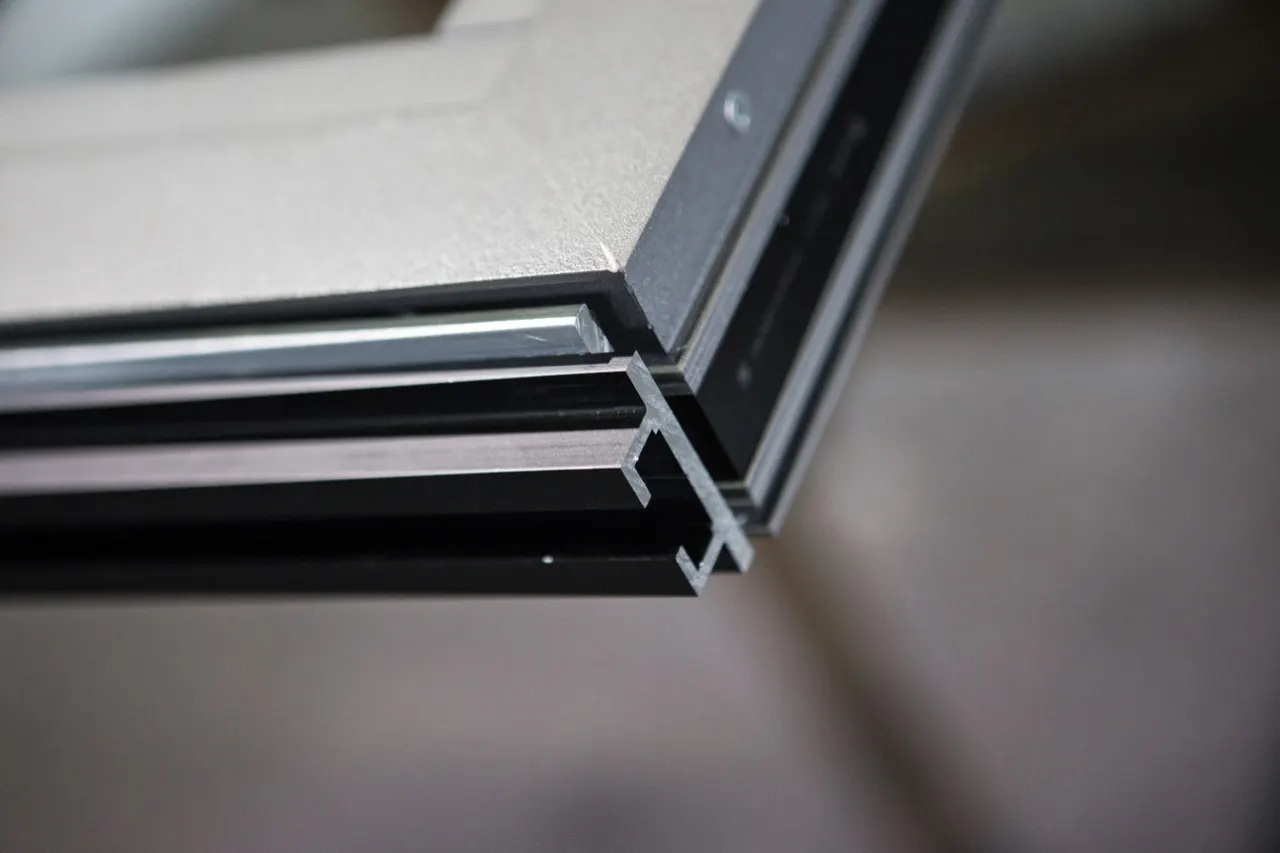
The thermal break interrupts that bridge. The profile is split into two shells, inner and outer, held together by polyamide strips that do not let the heat through. When you compare two quotes look at two lines: how wide those strips are and how many air chambers are left in between. That is where the difference lies between aluminium that really insulates and aluminium that only says so on the brochure.
The installation
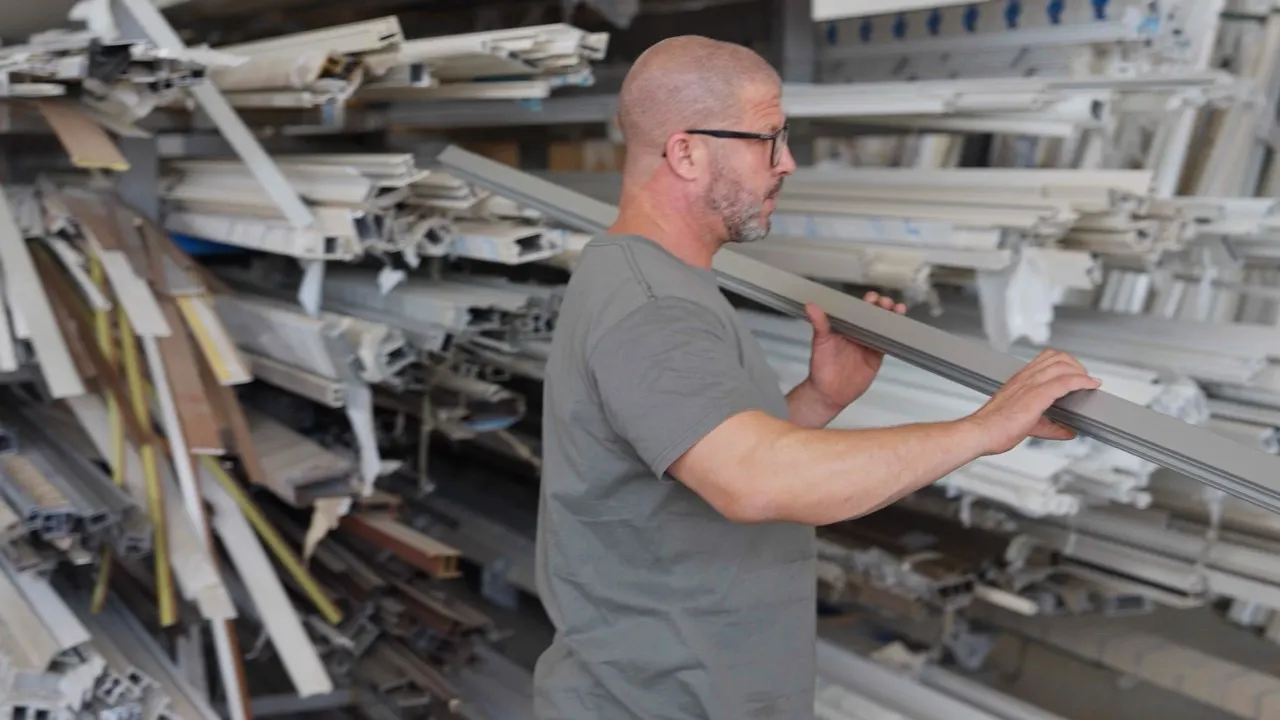
The wider the window, the more precise the fitting has to be: a few millimetres out of level and a three-metre sliding door drags. With us, whoever takes the measurements is whoever installs, and before we leave we try every sash together.
The quote
Two windows of the same size can cost very different amounts, and the items that shift the total are always the same. The profile series, that is, how wide the thermal break is and how many chambers it has. The opening type: a casement is the simplest solution, a sliding door adds tracks and rollers, a lift-and-slide adds the mechanism that lifts the sash. The glazing: double or triple, low-emissivity, acoustic or laminated safety glass. The finish: single colour, two-tone or wood effect. The opening itself: if the existing subframe is sound the job is quicker; if it has to come out, demolition and making good come into it.
That is why on this page you will not find a price per square metre. It would be a number that stopped being true after the site visit, and surprises mid-job almost always start there. What we can promise is the opposite: every item written down with its price beside it, so you can compare it line by line with other quotes, and that number does not change again.
Types
What changes is the opening type, and you choose that by how you live in the room, not by how it is built now.
How we work
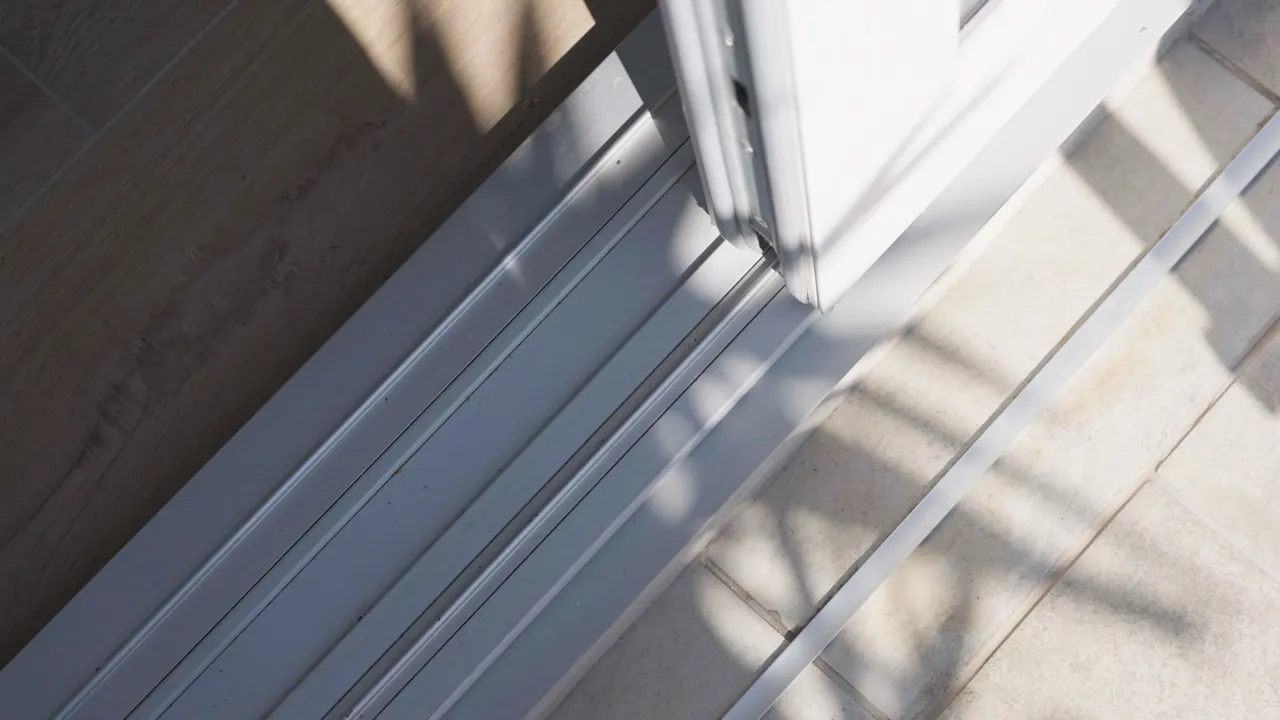
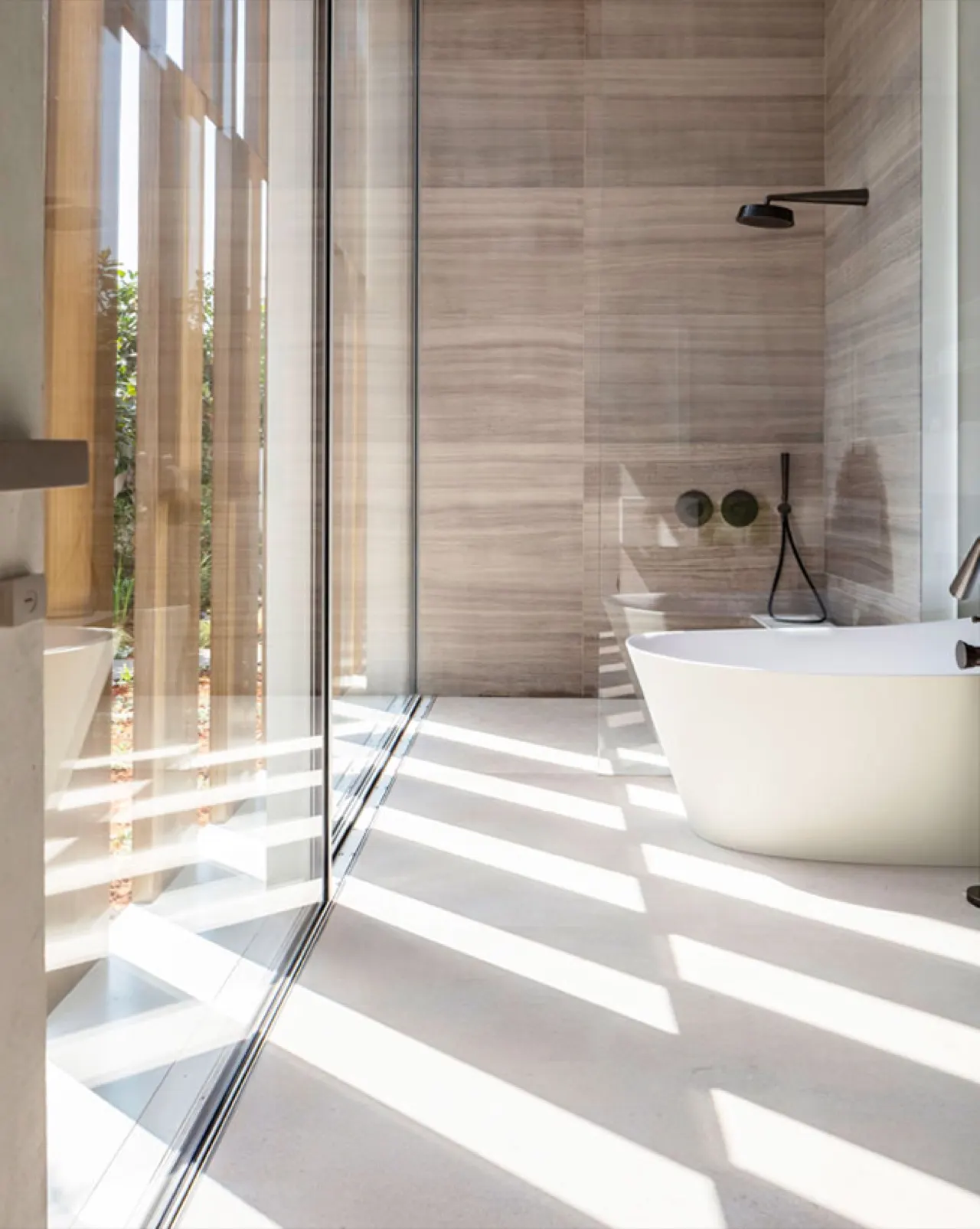
We measure every opening ourselves, one by one. On a large sliding door we also look at the threshold and the bearing surface, because that is where it is decided whether it will slide properly.
Profile series, glass, hardware, finish and fitting: every item with its own price. We go through it line by line, at our place or at yours.
We work the profiles in our own workshop in Martinsicuro and we fit them ourselves. We cover the furniture, clean up and take the old windows away.
We try every sash together before closing the job. If an adjustment is needed over time, we come back.
Tax deduction
Replacing windows is one of the deductible works in Italy. The money comes back in ten equal yearly instalments, and we prepare the ENEA filing.
Rates and ceilings change every year with the Italian budget law and differ between a main and a second home. The dedicated page has the current figures.
Our work
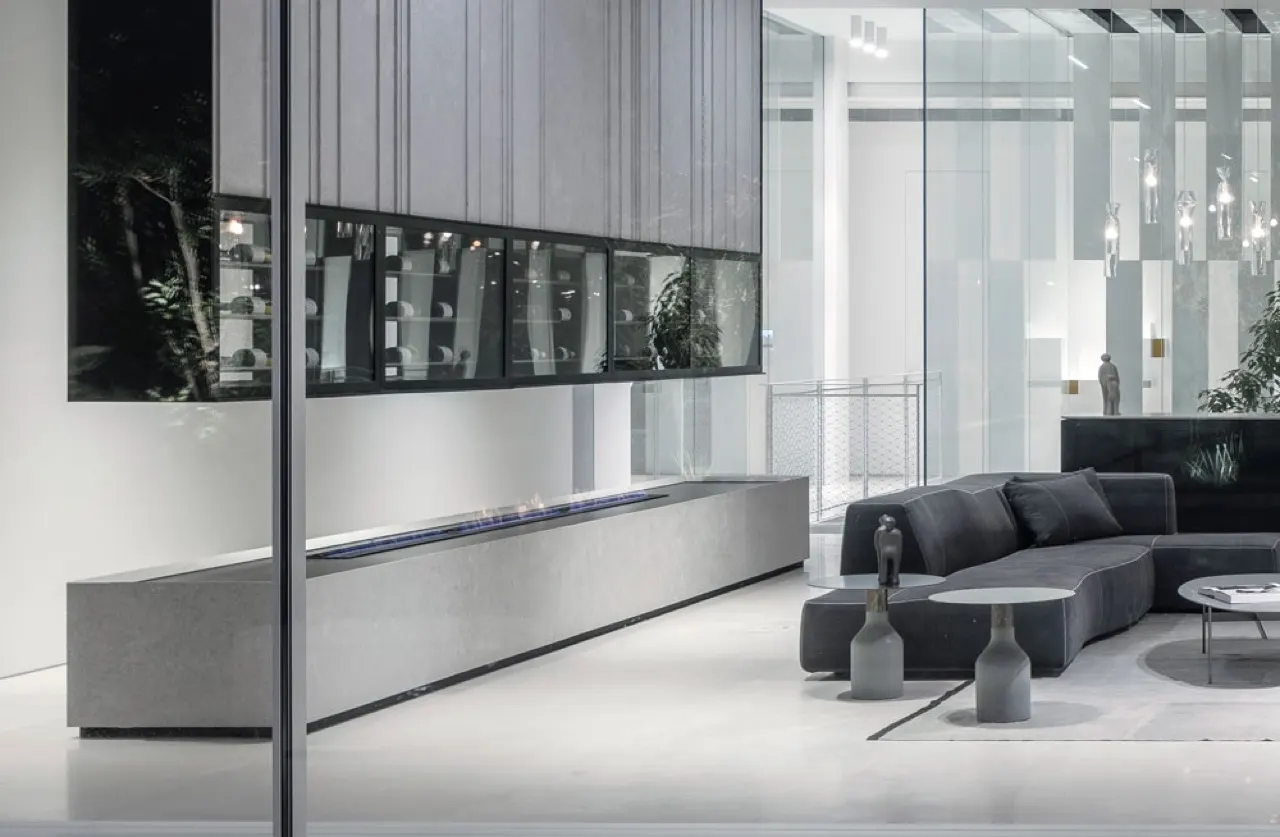
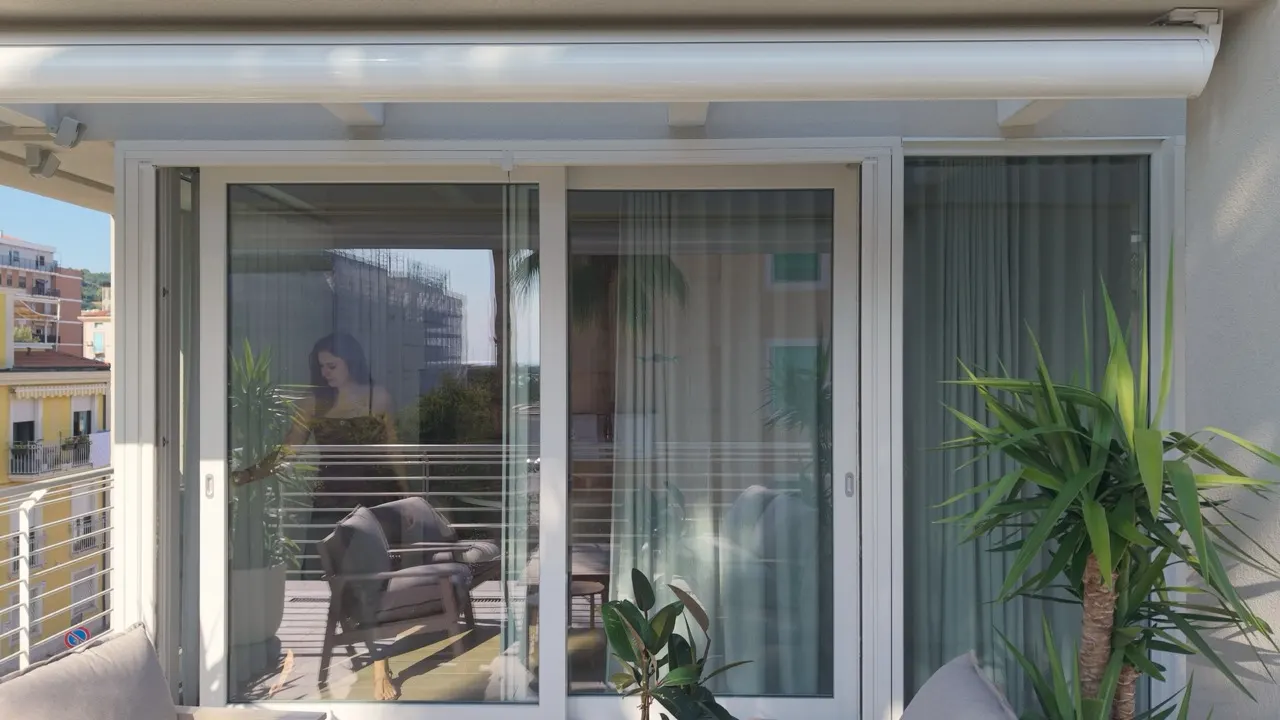
Flats on the coast, detached houses and renovations between Martinsicuro and the Val Vibrata.
Reviews published on the Diva Infissi Google listing, reproduced here in full.
The reviews are shown in Italian, exactly as they were written on Google. We do not translate what our customers said.
IL TOP, DI MEGLIO NON C'È, SUPER CONSIGLIATO, Qualità cortesia e prezzi giusti
Verified review on GoogleI migliori, hanno svolto un lavoro impeccabile, cordiali e precisi in tutto! Lavoro di qualità im tempi ottimali! Grazie davvero
Verified review on GoogleEsperienza e professionalità prodotti di ottima qualità. Consigliatissimo.
Verified review on Googleottimo prodotto , prezzo giusto , persone cordiali e molto professionali nella scelta del prodotto e importantissimo presenti nel post vendita !consigliatissimi
Verified review on GoogleHo contattato la Diva Infissi per la sostituzione degli infissi di casa e sono rimasta molto soddisfatta. Il team è stato puntuale, professionale e preciso in ogni fase del lavoro, dal sopralluogo alla posa finale. I nuovi infissi sono di ottima qualità, hanno migliorato isolamento termico e acustico, e l’estetica della casa ne ha guadagnato. Un ringraziamento particolare al titolare sempre disponibile e attento alle richieste. Consiglio vivamente quest’azienda a chi cerca affidabilità, competenza e materiali di alto livello.
Verified review on GoogleWhy choose us
Our own fitters, not an outside crew. Whoever takes the measurements is whoever installs, so if an opening has a problem they spot it while there is still time to sort it.
We come back and adjust it. We have been at Via dell'Industria 10 in Martinsicuro since 1990, we do not disappear once the invoice is paid.
No. After the site visit the quote is the quote. If extra work is needed we find it beforehand, not halfway through the job.
Yes, at our premises. Holding a section of profile and seeing where the thermal break runs clears things up better than ten catalogues.
Yes, powder coating is made to live outdoors. It wants a rinse with fresh water now and then and clean hardware, like any metal a few hundred metres from the sea.
Yes: uPVC windows, shutters, roller shutters, insect screens, security doors, awnings and glazing. One person to deal with for everything that closes your home.
Frequent questions
These are the questions that come up most often, on the phone and on Google.
It depends what you need to solve. uPVC insulates more for the same money and is the right choice when the aim is the heating bill and comfort in an ordinary flat. Aluminium has far slimmer profiles, so more light comes in, and it carries large sashes uPVC will not hold.
In practice: standard-sized windows, uPVC. Substantial sliding doors, wide spans, a project where the design matters or an opening where the frame must not steal space, thermal-break aluminium. At the site visit we look at your openings and tell you which makes sense, without pushing you towards the more expensive one.
In everyday Italian they are synonyms, and even in quotes the two words are used interchangeably. To be precise, infisso is everything fixed to the wall, frame included, while serramento is the part that closes, that is, the sash that opens and shuts.
The serramentista is the craftsman who makes and fits them. Anyone looking for new windows can safely use either word: they are looking for the same thing.
The price per square metre is the most requested figure and the least useful. On a small window the per-square-metre value is higher, because frame, glass and hardware are there anyway and get divided by a few square centimetres; on large glazing it comes down. And the same size changes a great deal depending on the profile series, the glass and the opening type.
What can be said before seeing anything is the general rule: for the same thermal performance, thermal-break aluminium costs more than uPVC, because to reach the same result the profile and the glass have to work harder. Be wary of anyone who gives you a price per square metre over the phone: either it is a bait price, or it will go up later.
Condensation forms when a surface is colder than the dew point of the air in the room. On aluminium with no thermal break the frame sits almost at the outside temperature, so in winter it is the first thing to get wet, even before the glass. It is not a fitting fault, it is physics.
There are two routes and they go together. Raise the surface temperature, that is, a thermal-break profile and glazing with a warm-edge spacer, and lower the indoor humidity by airing the rooms for a few minutes a day, especially after showering and cooking. A film of condensation on the outside of the glass on clear mornings is a different matter: that is a sign the window insulates well, not that it is faulty.
In favour: slim profiles and therefore more glass and more light; stiffness that allows large sashes and wide-span sliding doors; total freedom on colour, any RAL and two-tone inside and out; it does not rot, it does not distort in the sun and it is recyclable.
Against: for the same thermal performance it costs more than uPVC; with no thermal break it insulates almost nothing, so the cheap profile is to be avoided; it is still a metal, so near the sea it wants regular rinsing and attention to the hardware.
Wood insulates well by nature and it is beautiful, but it is alive: it moves with humidity and has to be re-treated or repainted every few years. Here on the coast, between direct sun and salt air, that maintenance cycle gets a good deal shorter, and on south-facing glazing it shows quickly.
Aluminium asks for nothing but cleaning, keeps its colour and allows profiles that would not stand up in wood. If you want the look of wood without the maintenance of wood, there is also a wood-effect finish on coated aluminium: from a distance you cannot tell, up close you feel the metal.
A powder-coated aluminium window, properly fitted, works away happily for thirty years and more. Aluminium does not rot, does not distort and forms an oxide layer on the surface that protects it by itself.
The parts that wear out first are gaskets, sliding door rollers and hardware, and they can all be replaced without touching the frame. What really shortens a window's life is not the material, it is a badly done installation.
Warm water and a neutral detergent, with a soft cloth, and plenty of rinsing. Greasy dirt needs patience and a second pass, not a more aggressive product: solvents, acetone, ammonia, limescale removers and abrasive pads attack the coating and dull it for good.
Near the sea it is worth rinsing with fresh water now and then, to take the salt off before it settles. A couple of times a year, vacuum the dust out of the sliding tracks and put some lubricant on the hardware: that is where most stiff closing starts.
The original colour is not paint applied with a brush: it is powder applied electrostatically and baked in an oven at about 200 degrees. Doing it properly means taking the windows out and recoating them in a plant, so it is not a job to do at home.
With metal enamels and a good primer you can cover it, and on a railing that may be enough. On a window the result ages quickly, especially on the edges and near the gaskets. If the window is old and has no thermal break, before spending on repainting it is worth doing the sums: changing the profile also solves the condensation and the heating bill.
On replacing windows in an existing home the reduced 10% Italian VAT rate applies, because it counts as extraordinary maintenance. There is, however, the rule on significant goods, and windows are one: the 10% applies to all the labour and to the value of the windows only up to the value of the labour, while the excess is charged at 22%.
In practice, in a job where the windows are worth much more than the labour, part of it stays at 22%. On new builds the rate is different and has to be checked case by case. On our quote the VAT is already broken out line by line, so you can see exactly what it applies to.
See also
Let us start
It takes under a minute to answer. We call you back within 24 working hours to arrange the free site visit.
Or call 328 329 5757
Mon - Fri 08:00 - 12:15 / 14:00 - 18:15