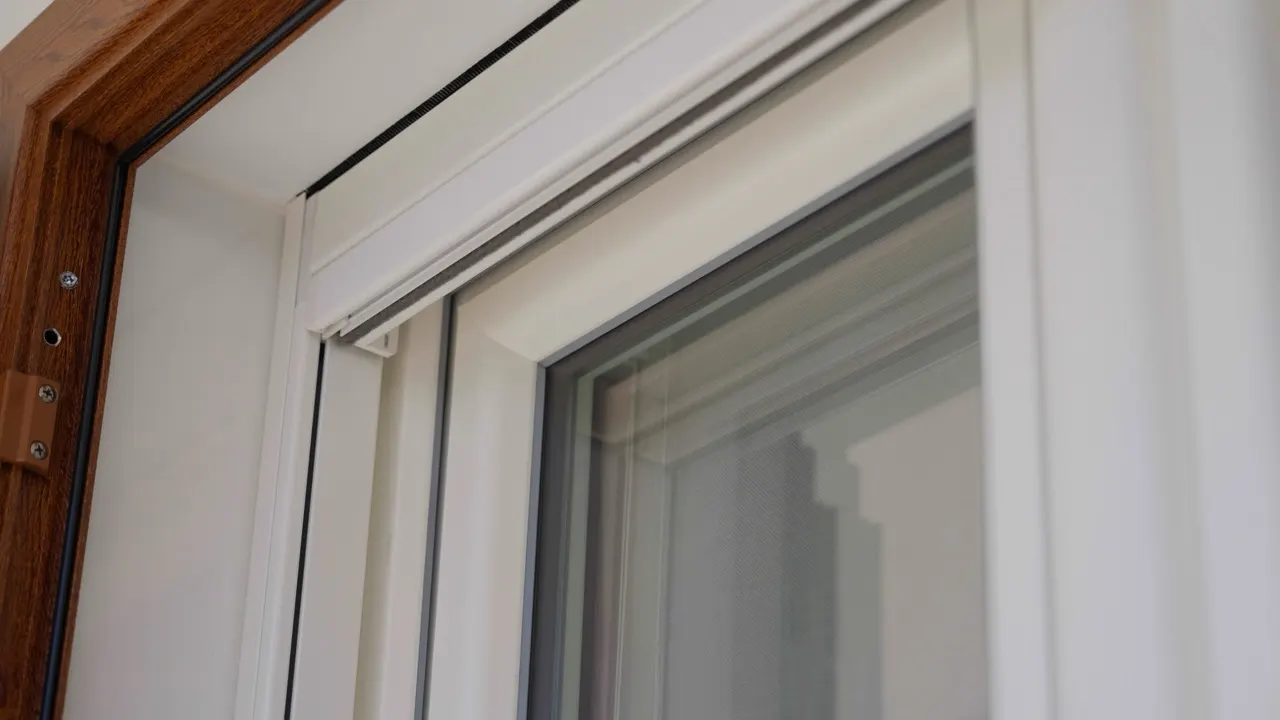
Mesh of an insect screen fitted to a white window, with the green of the garden behind

BETTIO insect screens

Made-to-measure insect screens, fitted by us

Roller or side-sliding, for windows and French doors. We measure every opening ourselves, because an insect screen that does not close on all four sides may as well not be there. Free site visit between the Teramo coast and the Piceno area.

4,8 on Google, 30 reviews In Martinsicuro since 1990 Site visit and quote, both free

The moment you notice

June, nine in the evening, and you close the window again

You open up to get some air moving and within two minutes everything that flies has come in.

The screen you have has warped: there is a finger's width of daylight between the mesh and the frame, and that is all a mosquito needs.

You sleep with everything shut and the air conditioning on, and at the end of the month the bill reminds you.

An insect screen does one thing, and if it is built for your opening it does it completely: it gives you back the open window. From then on the house cools itself at night, and you switch the air conditioning on far less.

Why made to measure

Three differences from an off-the-shelf screen

Kit screens fit the opening nearest to the one you have. Your opening, though, is almost always out of square by a few millimetres, and those millimetres are exactly the problem.

01

It closes on all four sides

The frame follows the opening and brush seals run all the way round the perimeter, filling the play between profile and masonry. That is where it is won or lost: a gap of a few millimetres lets everything through, and nobody notices until they turn the light off.

Brush seals on all four sides

02

The mechanism matters more than the mesh

The mesh almost never gives way on its own. What breaks is the roller spring or the carriage that runs in the guide, that is, the parts that work every time you open. That is why we fit BETTIO, who specialise in insect screens.

Aluminium profiles, coated fibreglass mesh

03

You do not see it until you need it

When closed the mesh sits rolled in the box or packed to one side, and the window is back as it was. In winter there is nothing to take down and nothing to carry to the cellar.

A few centimetres deep when closed

The models

Two ways to close an opening

Which one makes sense depends on two things: how many times a day you walk past it and how wide the opening is. Those are the first two questions we ask at the site visit.

Bettio vertical roller screen: the mesh comes down from the housing at the top
Vertical roller It goes up and down like a roller shutter and rewinds itself. The classic choice for windows.
Floor guide of an insect screen across a French door
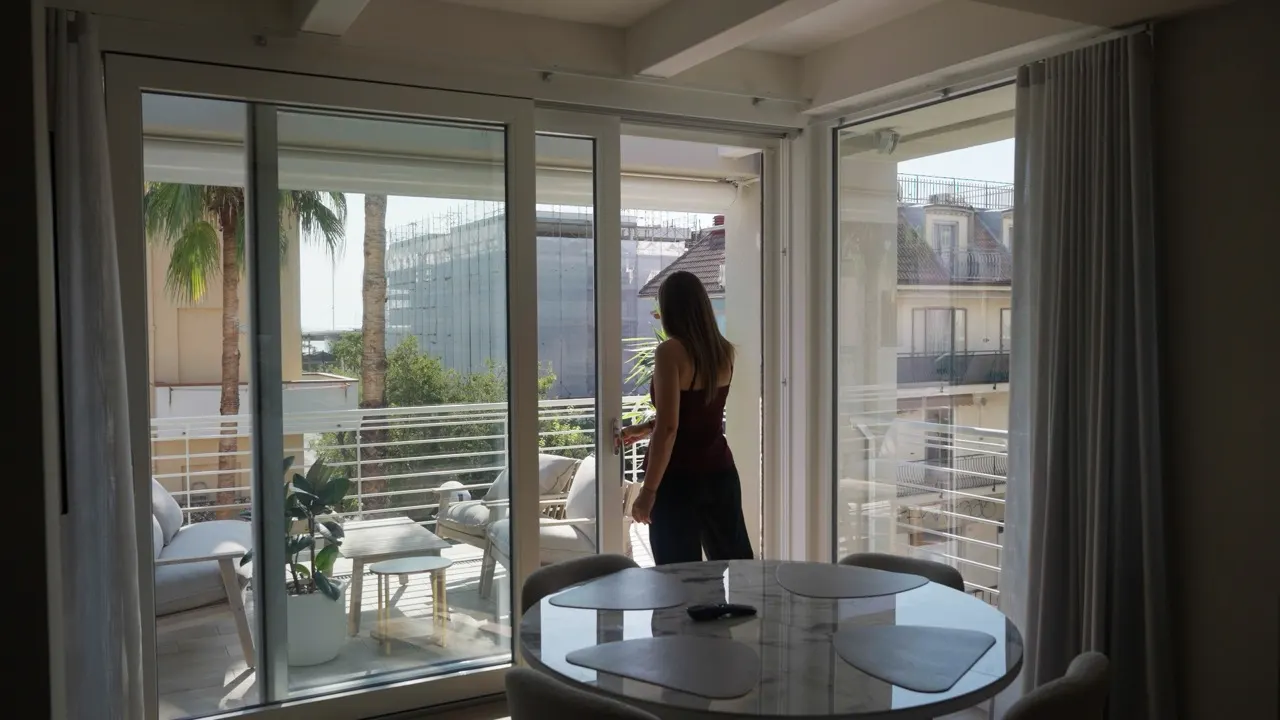
Side-sliding The mesh slides to one side inside a guide. On a French door you cross every day it is the most convenient.

The differences that matter

Why one lasts twenty years and another jams in its second summer

When you compare two quotes look at three lines. The mesh return: on roller screens a damped spring guides the mesh back instead of snapping it, and that is what extends the life of the rest of the mechanism. The bottom guide: in front of a French door it has to be flat and flush, because a two-centimetre step is something you meet every day with your hands full. The perimeter seal: the brushes have to run on all four sides, not just on the two uprights.

Then there is the mesh. The standard one is coated fibreglass, anthracite in colour, and in most houses it is the right compromise between visibility and strength. If there is a cat in the house you need a reinforced mesh: fibreglass does not argue with claws.

Bottom guide of a sliding insect screen flush with the sill of a French door
A Diva Infissi fitter installing an insect screen above a window

The measurement

An insect screen is worth as much as the measurement you gave it

A window opening is never perfectly square, and the difference between the width at the top and at the bottom eats up the seal. We take the measurements ourselves, at several points on each side, and whoever measures is the same person who then comes to fit. If a measurement is wrong, the problem is ours.

The quote

What pushes the price up or down

There is no single price for insect screens, and anyone who gives you one over the phone without having seen the opening is guessing. The same items always move the number. The type, because a vertical roller for a normal-sized window is the simplest to build, while a two-leaf side-sliding screen for a wide French door is a different job entirely. The size of the opening, since you pay by area. The colour, because white and ivory are standard finishes while a coating to order has to be ordered separately.

Then there are the items you can only see on site: how it can be fixed, inside the opening or on the window frame, and whether there is room for the mesh to run without touching the handle; and how many you fit at once, because doing eight in one visit costs less than doing one now and one next summer. The site visit is there precisely to close down these variables before putting a figure on paper.

Insect screen fitted to a white window, seen from inside

How we work

Four steps, no surprises

Free site visit

We measure every opening and look at where the screen can be fixed without running into the window handle. Those are the two checks that avoid ninety per cent of the problems.

Written quote

Type, sizes, colour, mesh and fitting: every item with its price. We go through it line by line, so you know what you are comparing.

Making and fitting

We prepare everything to measure and come and fit it ourselves. We take the packaging away and leave the place clean.

Test and support

We open and close every screen in front of you before we leave. If an adjustment is needed over time, we come back.

Tax deduction

On insect screens the deduction is not automatic

Only screens that really shade the sun fall under solar shading, that is, models with a technical fabric in place of the see-through mesh, and only if they meet the prescribed requirements. An ordinary insect screen stops insects but not heat, so it does not qualify. At the site visit we tell you straight away which of the two cases you are in.

0,35the gtot value not to be exceeded for solar shading
10 yearsover which the deduction is recovered, in equal instalments
ENEAonline filing included in the service
How the tax credit works

Solar shading has to be movable, CE marked to the product standard and installed on a facade other than north-facing. Rates and ceilings change every year with the Italian budget law. The dedicated page has the current figures.

Models and installations

The ones we fit most often

Some catalogue types and a few details of finished jobs between the coast and the Val Vibrata.

4,8 30 reviews on Google

People who have already had us in their home

Reviews published on the Diva Infissi Google listing, reproduced here in full.

The reviews are shown in Italian, exactly as they were written on Google. We do not translate what our customers said.

Roberto Picciuto 6 Giugno 2025

IL TOP, DI MEGLIO NON C'È, SUPER CONSIGLIATO, Qualità cortesia e prezzi giusti

Verified review on Google
Alexia Neziri 5 Giugno 2025

I migliori, hanno svolto un lavoro impeccabile, cordiali e precisi in tutto! Lavoro di qualità im tempi ottimali! Grazie davvero

Verified review on Google
Francesca D'Angelo 5 Giugno 2025

Esperienza e professionalità prodotti di ottima qualità. Consigliatissimo.

Verified review on Google
arturix 5 Giugno 2025

ottimo prodotto , prezzo giusto , persone cordiali e molto professionali nella scelta del prodotto e importantissimo presenti nel post vendita !consigliatissimi

Verified review on Google
Ilaria Vallese 5 Giugno 2025

Ho contattato la Diva Infissi per la sostituzione degli infissi di casa e sono rimasta molto soddisfatta. Il team è stato puntuale, professionale e preciso in ogni fase del lavoro, dal sopralluogo alla posa finale. I nuovi infissi sono di ottima qualità, hanno migliorato isolamento termico e acustico, e l’estetica della casa ne ha guadagnato. Un ringraziamento particolare al titolare sempre disponibile e attento alle richieste. Consiglio vivamente quest’azienda a chi cerca affidabilità, competenza e materiali di alto livello.

Verified review on Google

Why choose us

The questions you are asking yourself, and our answer

Who comes to fit them?

Our own fitters, not an outside crew. Whoever takes the measurements is whoever installs, so if an opening is out of square they spot it on the spot and not once the job is delivered.

Can they go on the windows I already have?

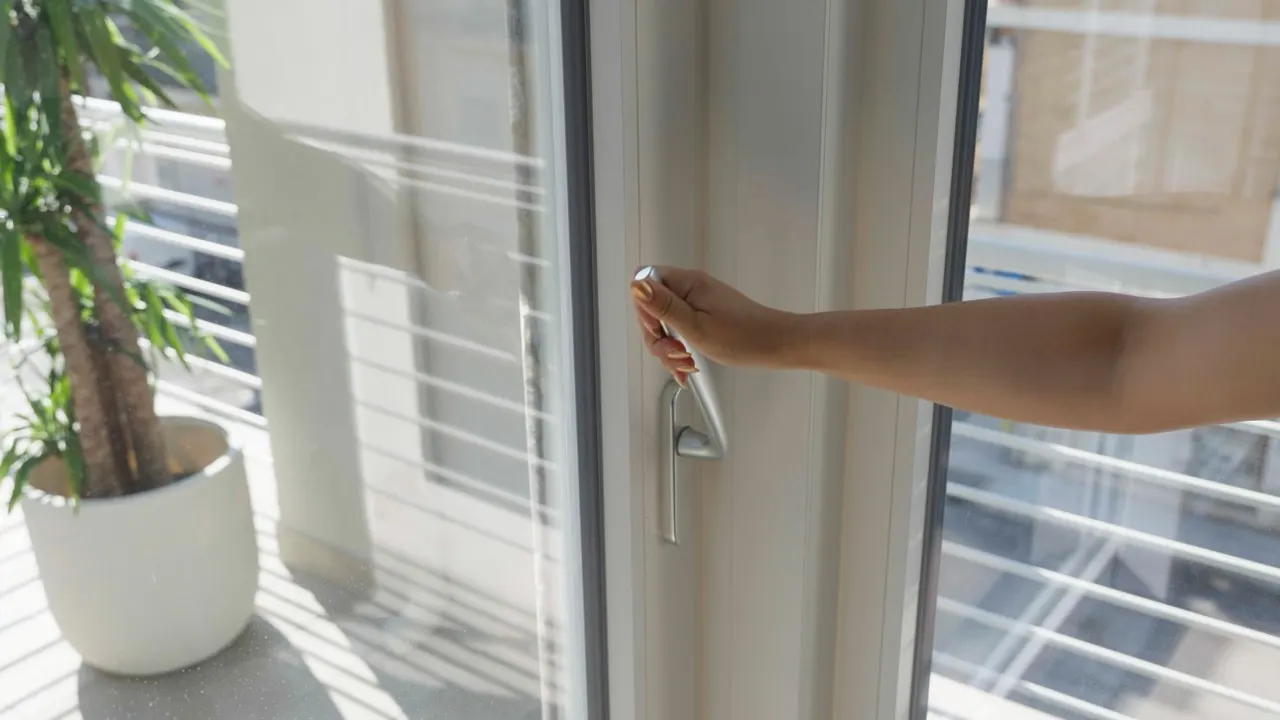
Almost always yes. The screen is fixed inside the opening or on the existing window frame, without touching the wall. At the site visit we check there is room and that the handle does not get in the way.

And if it jams after two summers?

We come back and sort it. We have been at Via dell'Industria 10 in Martinsicuro since 1990 and the houses we have worked on are right around here: we do not disappear once the invoice is paid.

Can the price change along the way?

No. After the site visit the quote is the quote. The things that could move the number we look at before writing it, not once work has started.

Can I see them in person?

Yes, at Via dell'Industria 10. A profile in your hand and a mesh held up to the light clear things up better than ten catalogues.

Do you do the rest as well?

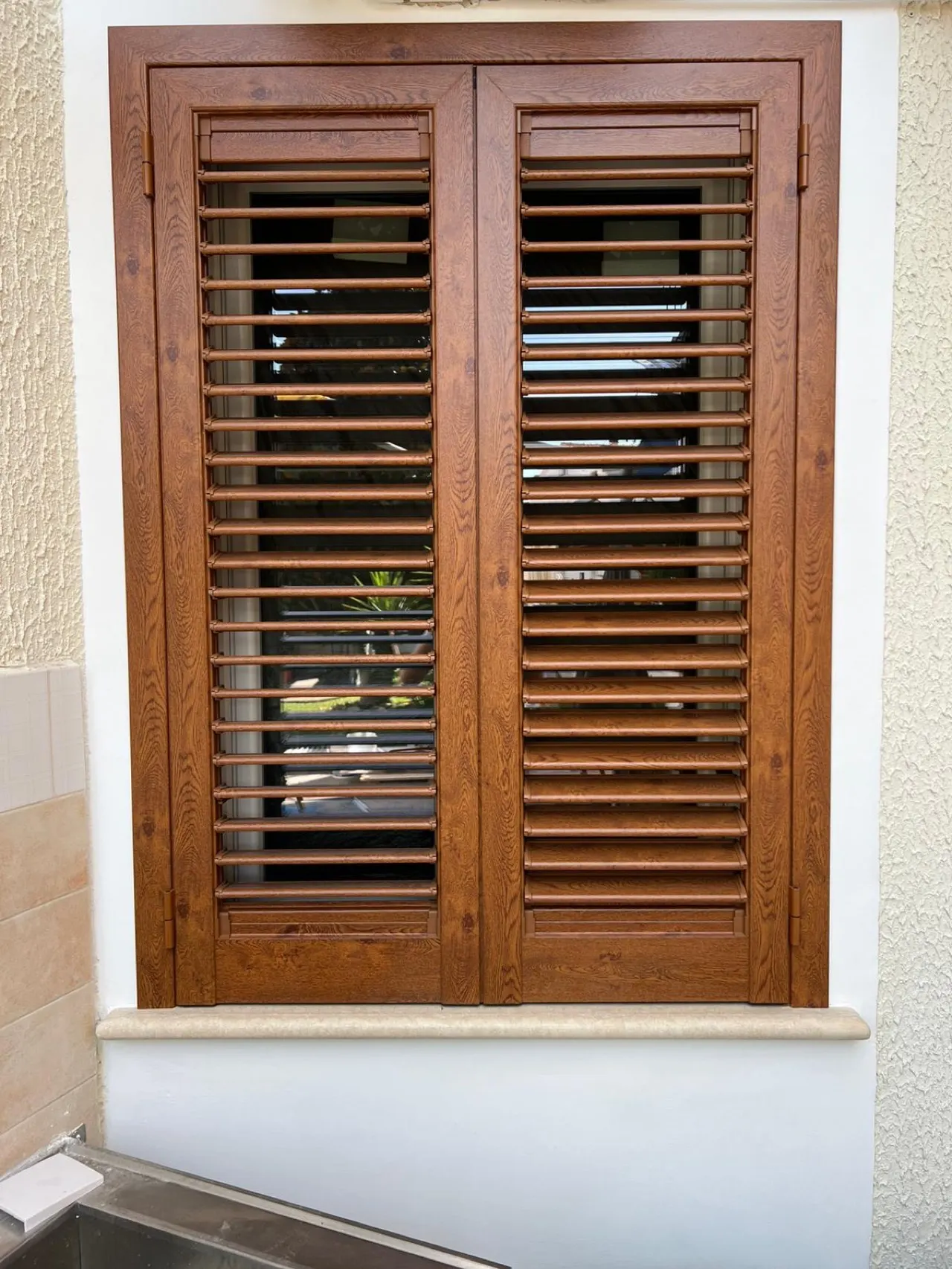
Yes: windows, shutters, roller shutters, awnings, security doors. If you are changing the window too, the screen goes on in the same visit and with the same site survey.

Frequent questions

What people choosing insect screens ask

These are the questions that come up most often, on the phone and on Google.

Roller or side-sliding insect screens, which is better?

The mechanism changes, and everything follows from that. A vertical roller screen winds the mesh onto a roller with a return spring: it costs less, it takes up almost no space when closed and it is perfect on a window you open a few times a day. The spring, though, is the part that works, and on a constantly used doorway it tires sooner.

A side-sliding screen moves the mesh sideways inside a guide: it opens with one hand, it does not spring back at you as you walk through, and it holds up well on a French door crossed ten times a day. In practice: an ordinary window, roller; a doorway you walk through, side-sliding.

What are magnetic insect screens?

They are screens where the closure is handled by a row of magnets along the edge: you walk through pushing with your body and it closes itself behind you. The cheapest versions are a curtain fixed to the frame with hook-and-loop tape; there are also versions with an aluminium frame and a magnetic leaf.

The real advantage is getting through with your hands full. The limits are just as concrete: the curtain distorts, in wind the magnets open and the seal is never that of a made-to-measure profile. On a French door used every day, a made-to-measure side-sliding screen costs more at the start and lasts far longer.

How do you measure an insect screen?

First you decide where it goes, because that changes everything: inside the reveal, that is, within the opening, or outside it, applied to the window frame or to the wall. Then the width is measured at three points, top, middle and bottom, and the smallest is kept; the height is taken at both sides and in the middle, on the same basis.

Two checks are almost always forgotten: the room for the box above the opening and the projection of the window handle, because the mesh has to be able to run without touching it. An error of a few millimetres here cannot be recovered: either the screen does not go in, or it goes in and leaves a gap. At the site visit we take the measurements ourselves and the measurement is our responsibility.

How much do made-to-measure insect screens cost?

There is no single price, but the order is always the same. The cheapest is the vertical roller screen for a normal-sized window. It goes up with the side-sliding one for a French door, and reaches the top with two-leaf versions for wide spans or with motorisation.

On top of that come the area of the opening, the colour, the type of mesh and how many you fit in the same visit. Anyone who fires a price at you over the phone without having seen the opening is giving you a bait number, which then grows. We come and measure free of charge and the price written on the quote is the final one.

When do insect screens qualify for the tax deduction?

Only when they work as solar shading, that is, when they stop the sun and not only the insects. Precise requirements apply: the shading has to be movable, CE marked to the product standard for external blinds, applied integrally to the building envelope, with a total solar transmittance factor gtot no greater than 0.35, and it cannot be on a north-facing facade.

An insect screen with the classic see-through mesh does not reach those values and therefore does not qualify. Models with a technical shading fabric in place of the mesh do. Where it does qualify, the cost has to be paid by dedicated bank transfer, the deduction is recovered in ten equal yearly instalments and the ENEA filing is required, which we prepare.

Can insect screens be left up when it rains?

Yes. The profiles are aluminium and the mesh is coated fibreglass: water does no damage, they are made to live outdoors. The problem is not the rain, it is the wind: a tensioned mesh acts as a sail, and a strong gust can bend the profile or pull the mesh out of the guide.

So there is one practical rule: if a windy storm is coming, wind the mesh back into its box. On the coast, add a rinse with fresh water after days of south-westerly wind, because salt and sand together are what really wears the guides.

Do insect screens have to be taken down in winter?

No, there is no need to take them down. A roller screen is left wound in its box and a side-sliding one wound back into its side housing: in that position the mesh is sheltered from sun and weather, and it is the right way to see them through the winter.

The only maintenance worth doing is at the end of the season: a pass with the vacuum cleaner in the guides to take out sand and dust, and a silicone spray lubricant on the running guides. That is why in May most screens start up again without any fuss and a few do not.

How do you clean insect screens?

With the mesh extended, first the vacuum cleaner with a soft brush to take away dust and pollen, then a barely damp cloth with warm water and mild soap, wiped without pressing and with the mesh supported by your hand on the other side.

Absolutely avoid the pressure washer and abrasive pads: the mesh gets punched through and pressurised water ends up inside the roller and the carriages. The part that repays most is the bottom guide, where sand settles: that, far more than a dirty mesh, is what makes a screen stiff when it used to run well.

Can just the mesh of an insect screen be replaced?

On fixed-frame screens yes, and it is a simple job: the mesh is held in a groove by a rubber bead, you pull the bead out, remove the torn mesh, tension the new one and put the bead back starting from a corner.

On roller and side-sliding screens the mesh is integral with the mechanism, so it is not a do-it-yourself job: you replace the mesh-and-roller assembly, or the handle bar if that is where the damage is. The good news is that as long as the mechanism is sound there is no reason to throw the whole screen away.

White or black mesh, which is better?

For the view the dark one wins, which is why the standard fibreglass mesh is anthracite grey. A light mesh reflects the light coming from outside and puts a veil in front of your eyes, while a dark one absorbs that light and from inside you almost forget it: you look at the garden, not at the mesh.

A light mesh is less noticeable from outside, on the facade, and on some white windows it is an aesthetic choice. Bear in mind that the colour of the mesh is independent of that of the profiles: you can have white or ivory profiles paired with an anthracite mesh, and that is the combination we choose most often.

Let us start

Six questions and we already know what we are talking about

It takes under a minute to answer. We call you back within 24 working hours to arrange the free site visit.

  • Free site visit and quote, with no obligation
  • We take the measurements, the responsibility is ours
  • The price written down is the final one
  • Attach a photo of the window and the estimate gets more accurate

Or call 328 329 5757
Mon - Fri 08:00 - 12:15 / 14:00 - 18:15

Call WhatsApp Get a quote