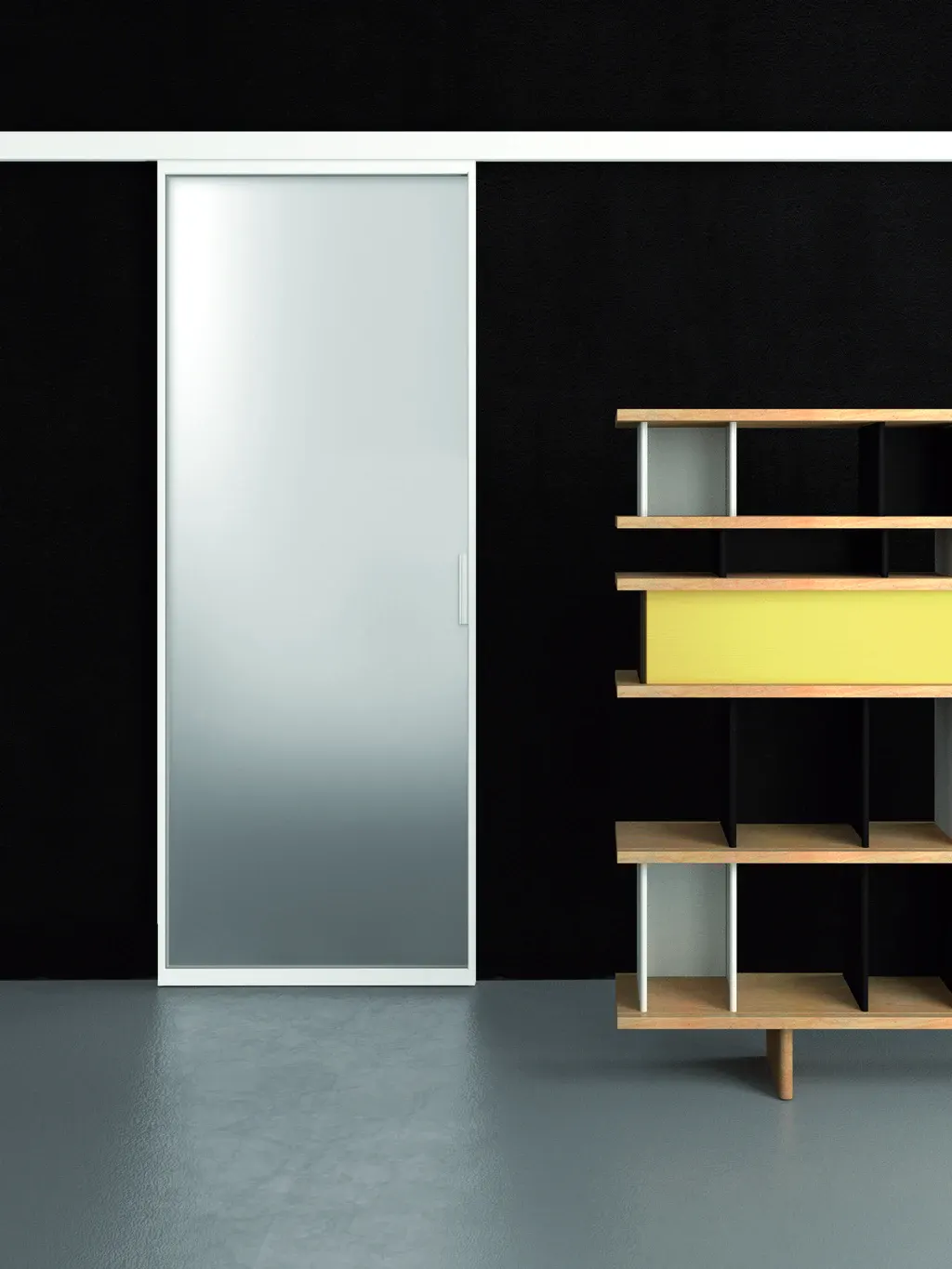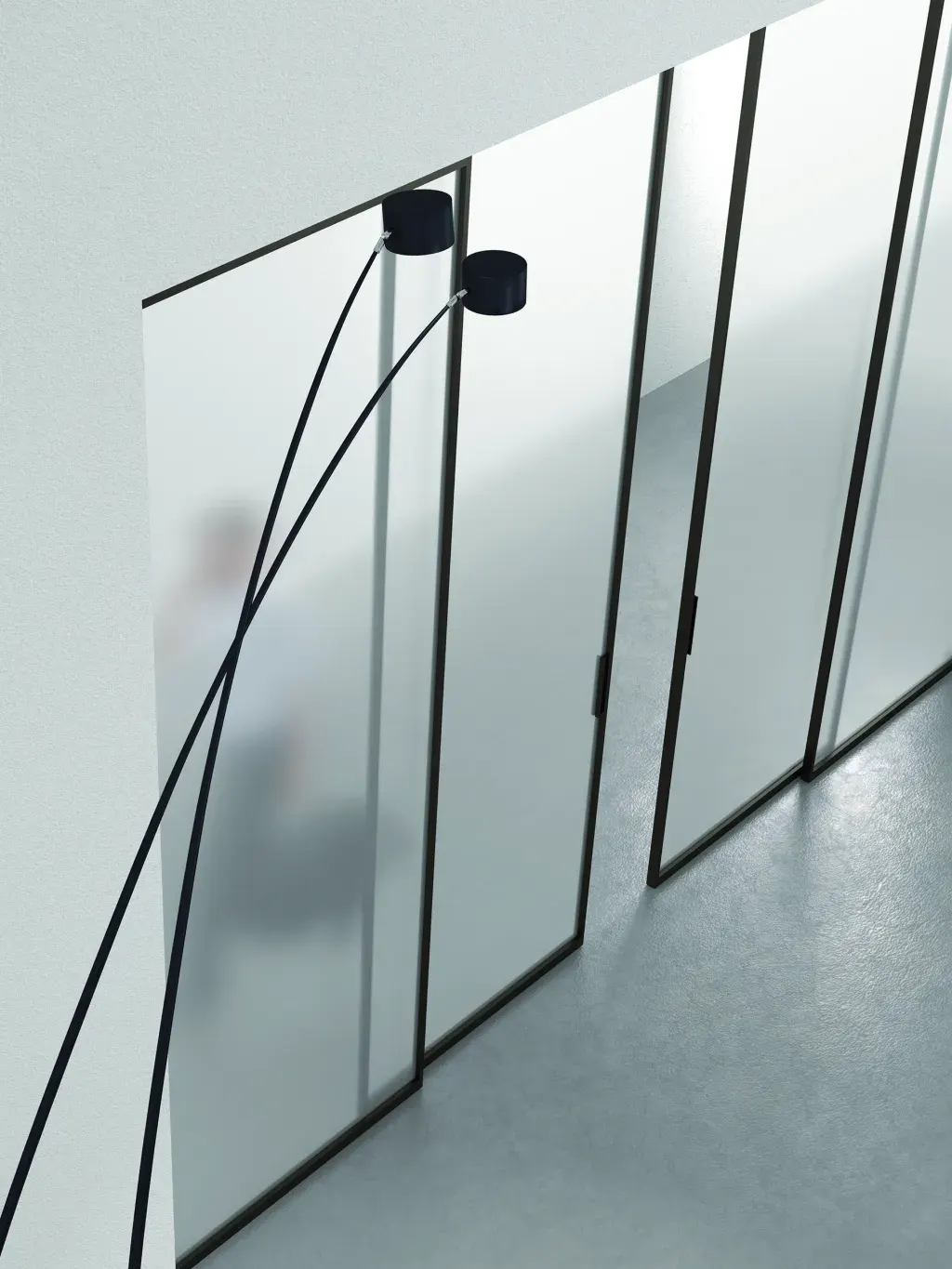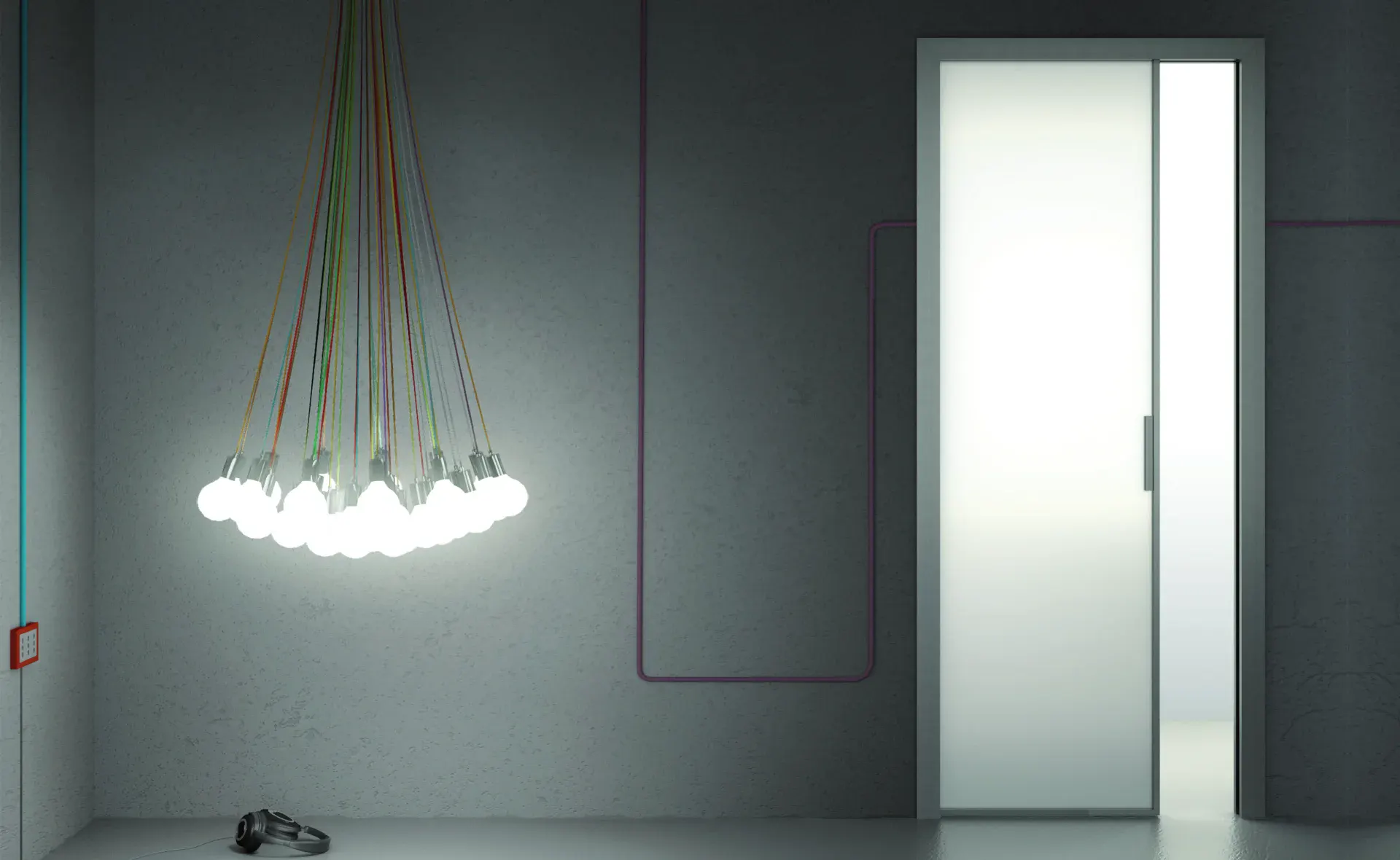
Pocket sliding interior door in satin glass with a flush-to-wall frame

Hinged, sliding, flush-to-wall

Made-to-measure interior doors, fitted by us

We measure the opening and the door adapts to the wall, not the other way round. Free site visit between the Teramo coast and the Piceno area.

4,8 on Google, 30 reviews In Martinsicuro since 1990 Site visit and quote, both free

The moment you notice

A door that works badly you feel every day

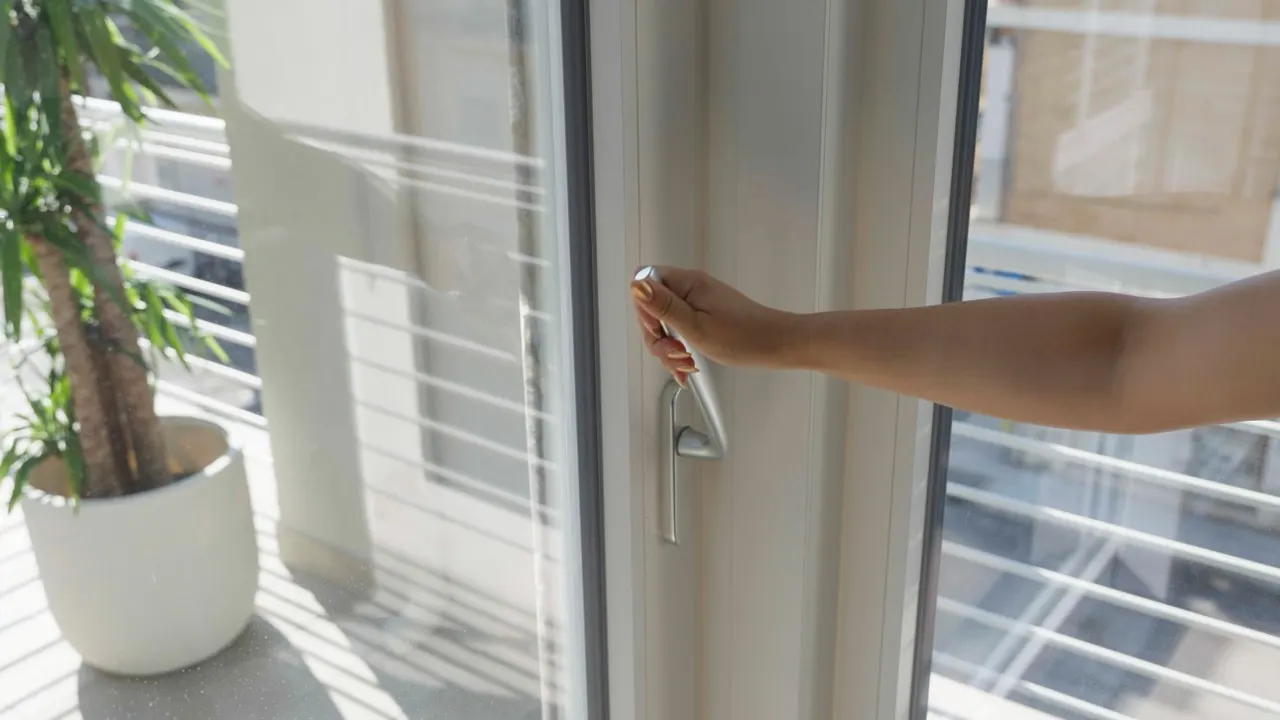
The handle has to be lifted, pushed and guided, otherwise the latch does not engage.

There is no window in the hallway and with the doors closed you switch the light on even at midday.

The bedroom door reaches the bed and the swing takes away half a metre of the room.

Three different problems solved in three different ways: the frame, the glass, the opening type. That is why the first thing we do is come and look at the openings, one by one.

Why change them

Three things that really change, room by room

An interior door does not shield you from the cold outside, so it does its work elsewhere: the space it leaves you free, the light it lets through, the noise it stops.

01

The space becomes usable again

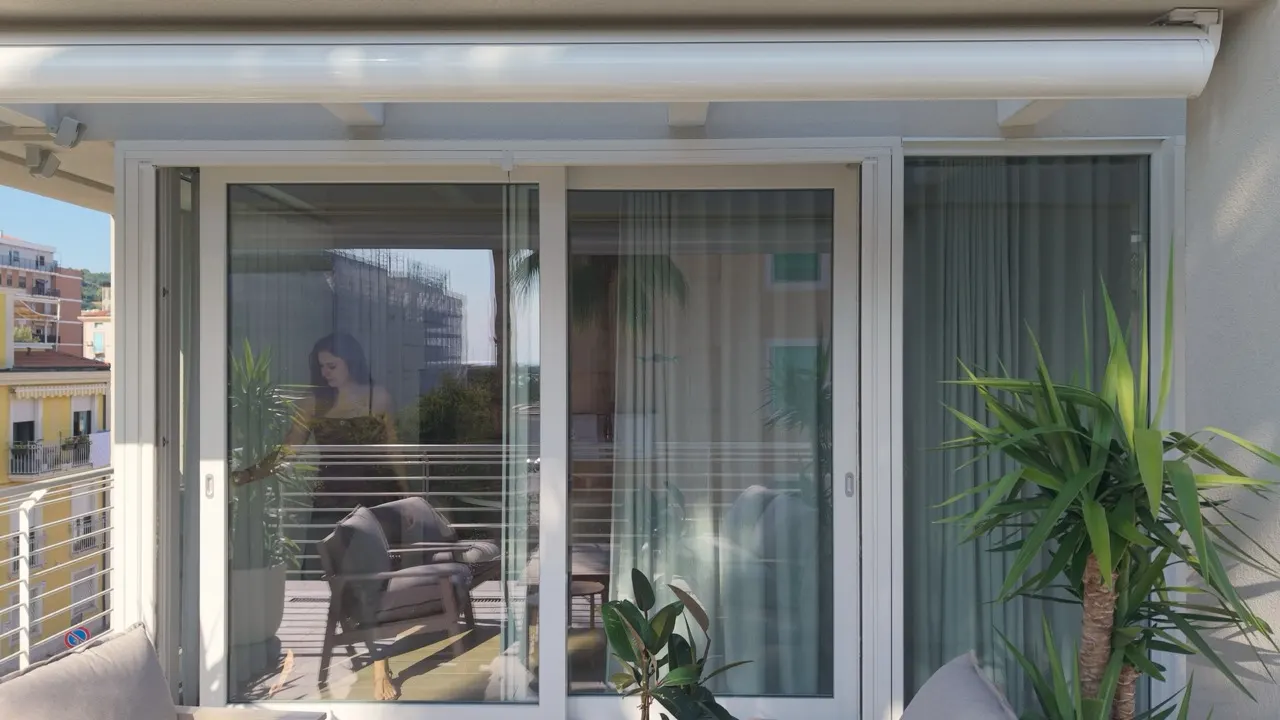
A hinged door needs a clear quarter-circle to open into, and that quarter-circle is floor you cannot furnish. A sliding door does not ask for it: it goes into the wall or slides along it.

Surface-sliding or pocket-sliding
02

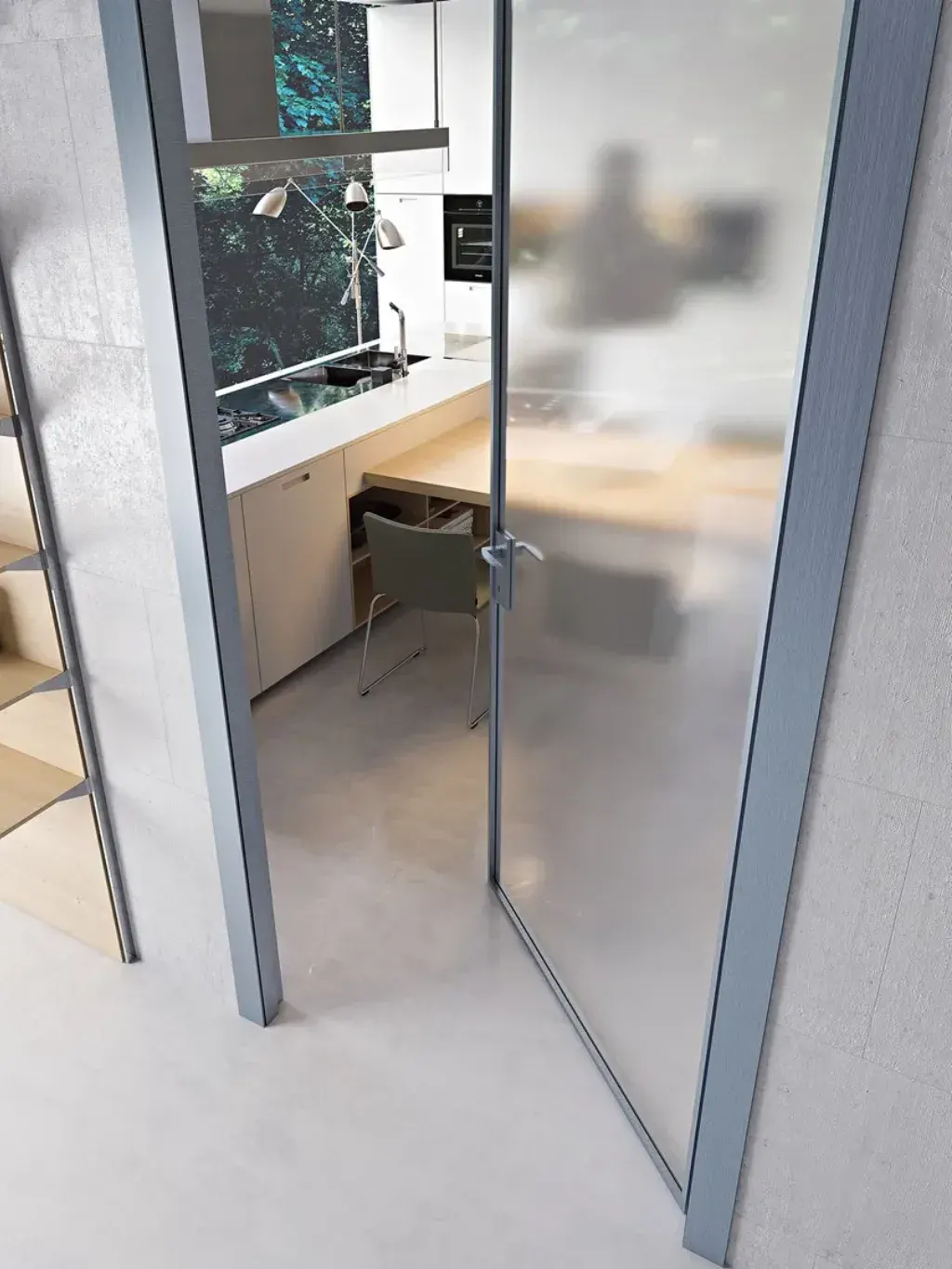
The light gets through, the view does not

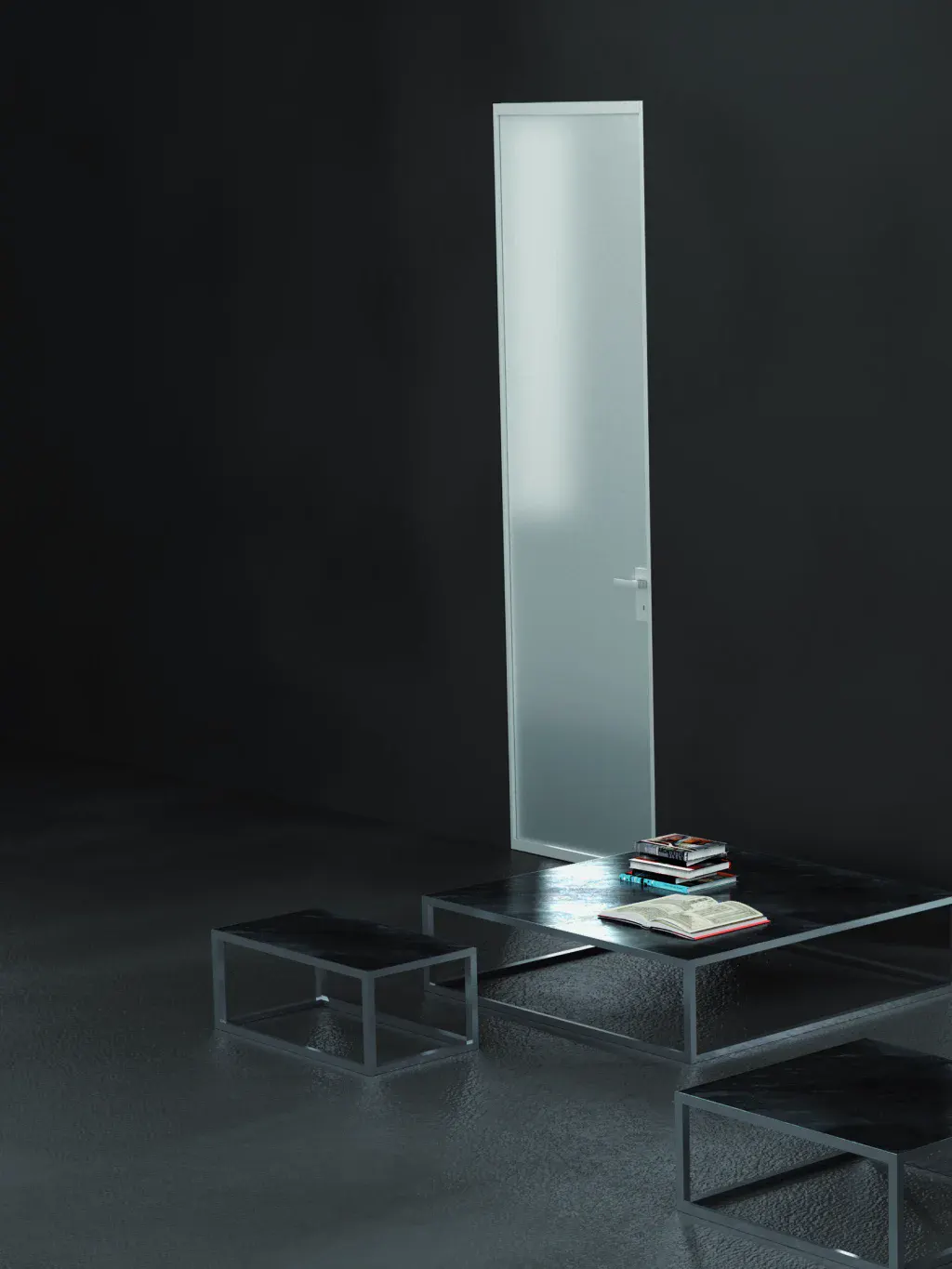
Satin glass brings brightness into hallways and landings where there is no window, and the room behind still stays private.

Satin, acid-etched or clear glass

03

The rooms really do separate

Between a solid leaf that beds down on all the stops and a lightweight door that only touches the frame here and there, there is a difference you can hear: the television in the living room stops reaching the bedroom.

Solid leaf and perimeter gasket on the frame

The opening types

Three ways to open a door, three different rooms

It is not a matter of taste. It is a matter of how much space there is around the opening and of when it is decided: before the plastering, or with the house finished.

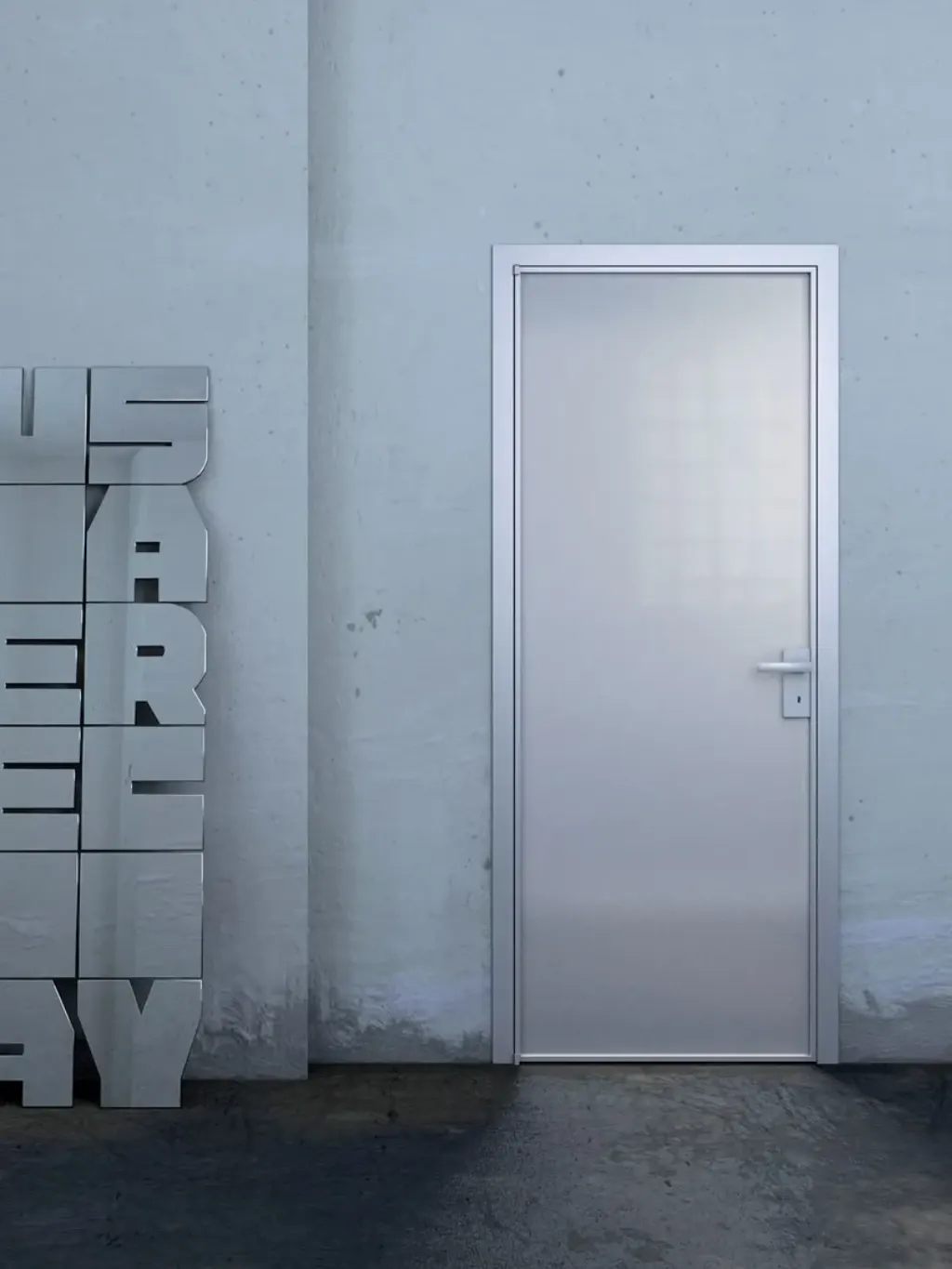
Hinged interior door in satin glass with an aluminium frame
Hinged The opening everyone knows. The simplest to fit and to adjust over the years.
Surface-sliding interior door in satin glass with a visible track
Surface-sliding It slides along the wall, on a visible track. It does not touch the wall, so it can be done with the house already finished.
Pocket sliding interior door open inside the wall
Pocket-sliding The leaf disappears inside the wall. It needs a pocket frame, and that is decided when the wall is built.

Finishes

Made to measure means the door adapts to the wall

In real houses walls are not the same thickness from one side of the room to the other, and they almost never match the drawing. That is why frame and architraves are cut to the real size of your opening: it is the difference between a door that closes flush and a door with a gap that funnels open towards the top.

On top of that you choose the rest. The finish, lacquered in colour or laminate wood effect. The glass, how much and where. The handle and the hinges, exposed or concealed. And if you want the door to disappear into the wall there is the flush-to-wall system, with the aluminium frame buried in the plaster and the leaf paintable like the wall: it has to be decided beforehand, because it is a bricklaying job as well as a joinery one.

Hinged interior door with a coated aluminium frame
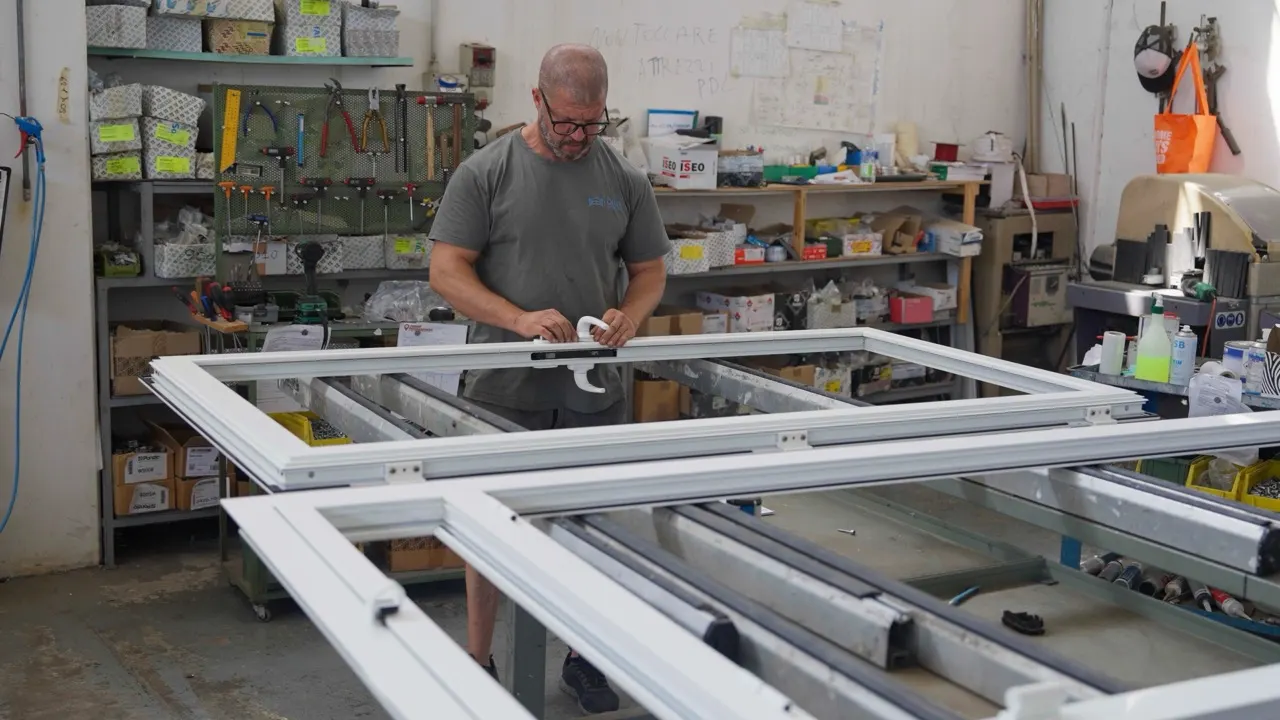
A Diva Infissi technician at work in the Martinsicuro workshop

Measurement and fitting

The crooked opening is the rule, not the exception

In a real house openings are not square and the floor is not level. With us, whoever comes to measure is the same person who then fits: whatever they find, they solve while taking the measurements, not in front of you on fitting day.

The quote

What changes the price of an interior door

Two doors that look the same can cost very different amounts, and the items that shift the total are always the same. The opening type: a hinged door is the simplest solution, a surface-sliding one adds track and rollers, a pocket one adds the pocket frame to be built in. The finish: laminate, lacquered in colour, veneered in real wood. The glass: how much there is, and whether it is satin, toughened or laminated. The frame: normal architraves or flush-to-wall. The fitting: if the existing pocket frame is sound it is reused; if it has to come out, demolition and making good come into play.

The number that counts is the final one, door plus fitting plus disposal of the old one. On our quote every item has its price written beside it, so you can compare it line by line with the others. After the site visit that number does not change again.

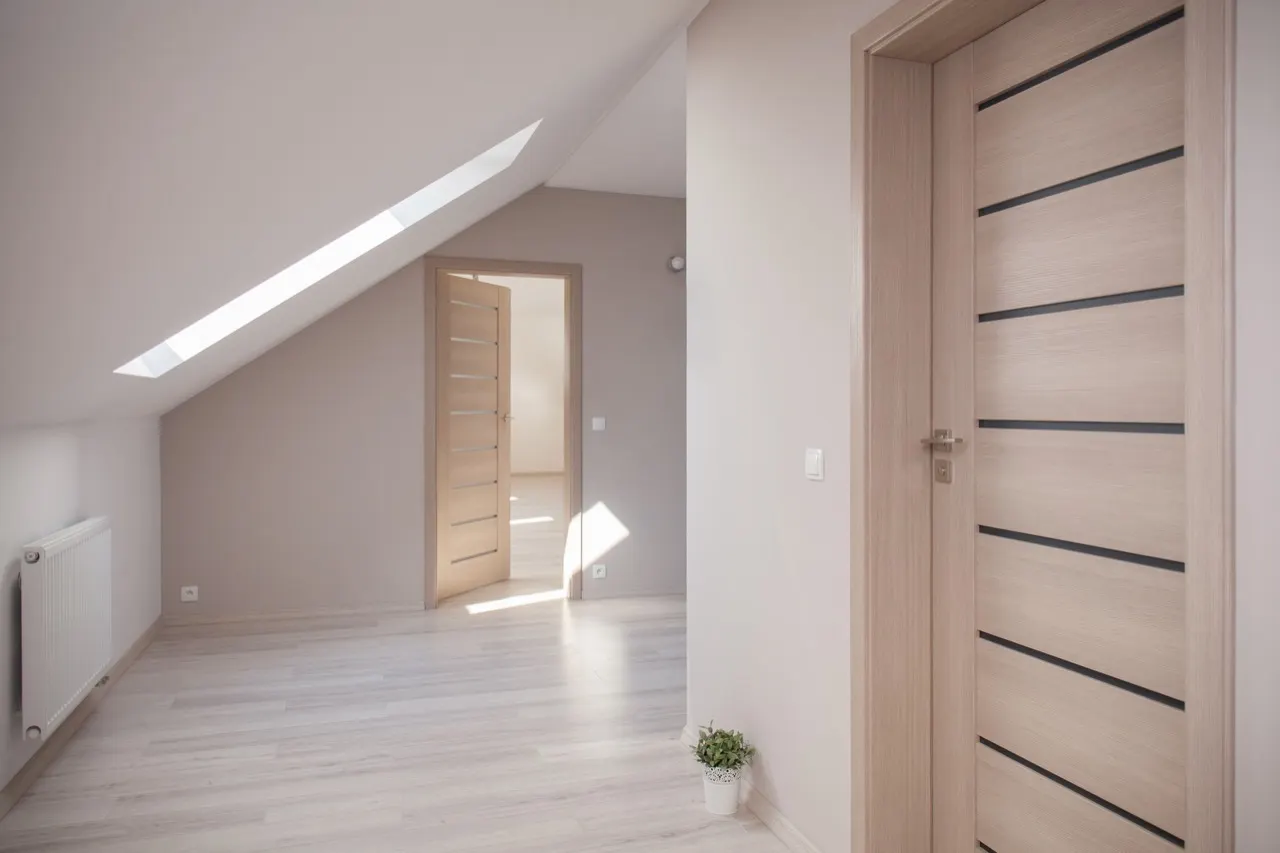
Interior doors in light wood-effect laminate in a loft room

How we work

Four steps, no surprises

Free site visit

We measure every opening, check the thickness of the wall and which way it is best to open. Room by room, because in a house they are never all the same.

Written quote

Leaf, frame, glass, handle and fitting: every item with its price. We go through it line by line before you sign.

Making and fitting

We prepare everything to the measurements taken and we fit it ourselves. We cover the floor, clean up and take the old doors away.

Final check and support

We try every leaf together. If the house settles over time and a door needs adjusting, we come back.

Models

The finishes chosen most often

Satin glass, light lacquer, wood-effect laminate. These are catalogue images of the systems we fit, to give you an idea before the site visit.

4,8 30 reviews on Google

What people who called us write

Reviews published on the Diva Infissi Google listing, reproduced here in full.

The reviews are shown in Italian, exactly as they were written on Google. We do not translate what our customers said.

Roberto Picciuto 6 Giugno 2025

IL TOP, DI MEGLIO NON C'È, SUPER CONSIGLIATO, Qualità cortesia e prezzi giusti

Verified review on Google
Alexia Neziri 5 Giugno 2025

I migliori, hanno svolto un lavoro impeccabile, cordiali e precisi in tutto! Lavoro di qualità im tempi ottimali! Grazie davvero

Verified review on Google
Francesca D'Angelo 5 Giugno 2025

Esperienza e professionalità prodotti di ottima qualità. Consigliatissimo.

Verified review on Google
arturix 5 Giugno 2025

ottimo prodotto , prezzo giusto , persone cordiali e molto professionali nella scelta del prodotto e importantissimo presenti nel post vendita !consigliatissimi

Verified review on Google
Ilaria Vallese 5 Giugno 2025

Ho contattato la Diva Infissi per la sostituzione degli infissi di casa e sono rimasta molto soddisfatta. Il team è stato puntuale, professionale e preciso in ogni fase del lavoro, dal sopralluogo alla posa finale. I nuovi infissi sono di ottima qualità, hanno migliorato isolamento termico e acustico, e l’estetica della casa ne ha guadagnato. Un ringraziamento particolare al titolare sempre disponibile e attento alle richieste. Consiglio vivamente quest’azienda a chi cerca affidabilità, competenza e materiali di alto livello.

Verified review on Google

Why choose us

The questions you are asking yourself, and our answer

Who comes to fit them?

Our own fitters, not an outside crew. Whoever takes the measurements is whoever installs, so if an opening has a problem they spot it while there is still time to sort it.

And if a door does not close properly afterwards?

We come back and adjust it. We have been at Via dell'Industria 10 in Martinsicuro since 1990, we do not disappear once the invoice is paid.

Can the price change along the way?

No. After the site visit the quote is the quote. If extra work is needed we find it beforehand, not halfway through the job.

Can I see them in person?

Yes, at our premises in Martinsicuro. Handling a leaf and hearing how it closes clears things up better than ten catalogues.

Do you take the old doors away?

Yes. Removal and disposal are included in the job, they are not an item that appears afterwards.

Do you do the rest as well?

Yes: uPVC and aluminium windows, security doors, shutters, insect screens, awnings. One person to deal with for everything that closes your home.

Frequent questions

What people changing their doors ask

These are the questions that come up most often, on the phone and on Google.

Sliding interior doors: surface-mounted or pocket, which is better?

It depends almost entirely on when you decide. The pocket door is the cleanest solution, the leaf goes into the wall and nothing shows, but it needs a pocket frame inside the wall: it goes in when the wall is built or demolished, not afterwards. In that stretch of wall you can then no longer chase in services or hang heavy shelves.

The surface-mounted one is fitted with the house finished, in half a day, because the track is fixed onto the wall. It stays visible, you can see the leaf parked to one side, but it is the only route if the wall is already plastered or if there are pipes inside.

How are interior doors fitted, do the walls have to be knocked about?

Hardly ever. If the subframe buried in the wall is sound and square, the new door is fitted onto it: the old one comes off, the new frame is fixed and the sides are closed with architraves, which are telescopic and open out to the real thickness of the wall. No demolition, no plaster to redo.

The wall is only broken into in three cases: the subframe is rotten or out of square, you want to change the width of the opening, or you are moving to a pocket sliding door. In those cases there is demolition and making good, and we say so at the site visit because it changes the price.

How do you measure interior doors?

You measure the clear opening as finished, that is, the width and height of the hole with the floor laid: the width at three points, top, middle and bottom, because the three numbers are nearly always different and the narrowest one counts. Then the thickness of the plastered wall, again at several points, which is what determines the architraves.

You also note the way it opens, looking at the door from the side you push, and whether there are skirtings, radiators or switches too close. If you would rather not get it wrong: we take the measurements, and the site visit is free.

How much does it cost to change the interior doors of a house?

The price of an interior door changes mainly for five reasons: the opening type, the finish, how much glass there is, the type of frame and the state of the existing subframe. A laminate hinged door on a sound subframe sits at the cheap end of the scale; a flush-to-wall pocket sliding door lacquered in colour sits at the other end, because it is a bricklaying job too.

When you compare two offers, check that the same things are inside them: many prices you see around are the leaf only, with no frame, no fitting and no disposal of the old one. On our quote the items are listed one by one and the total is the final one.

Which material should you choose for interior doors?

There are four families. Laminate is the most resistant to scratches and damp and copes well with the hallways of a house with children and dogs. Lacquered is painted: it is the best-looking in a solid colour and can be touched up, but it marks more easily. Real wood veneer has authentic grain and no two panels alike. Glass, on its own or in a frame, is used where light is needed.

The practical rule: laminate where people pass and knock into things, lacquered where people look, wood where the rest of the house is wood, glass where it is dark.

Lacquered or laminate interior doors, which is better?

A lacquered door is painted over a substrate: the colour is full and deep, it can be matched close to the wall shade and, if it gets scratched, a coach painter or a decorator can touch it up. The downside is that it marks more quickly, especially on the edges and near the handle.

A laminate door has a printed, melamine-faced surface that is much harder: it resists scratches, knocks and damp better than lacquer and is the sensible choice for bathrooms, hallways and houses with children. If it does get damaged, though, it cannot be touched up; the leaf is replaced.

uPVC or wooden interior doors, which is better?

uPVC has one precise advantage: water does not swell it. It is the right choice where there is constant damp, so windowless bathrooms, utility rooms, cellars, basements and taverns, and it cleans with water and soap without any trouble.

In the rest of the house wood, or a laminate-faced panel, stays ahead on two counts: it weighs more and therefore insulates sound better, and to the eye and the hand it has a quality uPVC does not reach. In practice it is common to put uPVC in the bathroom and the utility room and wood or laminate everywhere else.

Is an interior door with glass worth it?

In landings, windowless hallways and between kitchen and living room, yes, and the difference shows immediately: the little light coming in from a room with a window also reaches where there is none. With satin glass the light passes but shapes do not, so it is fine on a bathroom too.

Two things to know first. Glass is heavy, so hinges and frame have to be sized to carry it. And if there are children in the house you ask for toughened or laminated glass, which does not break into sharp shards.

When do interior doors qualify for the tax deduction?

Interior doors do not fall under the Italian ecobonus, because they do not separate the house from the outside and therefore do not save energy. They do fall under the renovation bonus, but only on one condition: that they are part of extraordinary maintenance, restoration or renovation work, or of work on the common parts of a block of flats.

Changing only the interior doors of a flat, with no other work, is ordinary maintenance and on its own does not give the right to the deduction. If you are renovating, though, the doors count as part of the spend: you need the reference-bearing bank transfer quoting the legislation and invoices in the name of whoever claims. Rates and ceilings change every year with the budget law, so have them confirmed by whoever handles your paperwork.

How do you adjust an interior door that no longer closes?

Nine times out of ten it is not the door, it is the hinges. Concealed hinges have three adjusting screws, one for each direction: they raise or lower the leaf, move it sideways to recover the gap, and push it forward or back so it beds down better on the stop. You move one screw at a time, half a turn at a time, checking the gap after each turn.

If the door only rubs in summer it is the wood that has taken up damp, and it usually settles back by itself. If it rubs all the time and the hinges are already at the end of their travel, the frame has moved: there you need to put it back square. On doors we have fitted, we come and do the adjustment ourselves.

Let us start

Tell us how many doors and in which rooms

It takes under a minute to answer. We call you back within 24 working hours to arrange the free site visit.

  • Free site visit and quote, with no obligation
  • The price written down is the final one
  • Attach a photo of one opening and the estimate gets more accurate
  • Removal and disposal of the old doors included

Or call 328 329 5757
Mon - Fri 08:00 - 12:15 / 14:00 - 18:15

Call WhatsApp Get a quote